


Carbon Fiber Strain: Colorado-Bred Gas With a Cookie-Dough Finish
The Carbon Fiber strain is one of those cultivars that earns its name the moment you open the jar — dark, graphite-green flower with a metallic frost of trichomes and a nose that swings from grape candy to raw diesel in a single breath. It's a balanced hybrid out of Colorado, and if you like THCA flower that tastes like dessert and hits like fuel, this is the lane.
Quick Facts
In short: A balanced Cannarado hybrid — grape-and-cream sweetness over diesel and black pepper, a fast talkative opening, and physical calm that arrives without couch-lock.
- Type: Balanced hybrid, roughly 50% indica / 50% sativa
- THC: Typically 20%–25%, with Leafly listing it at 24%
- CBD: Trace — 0.1%–0.3%, plus roughly 1% CBG
- Dominant terpene: Caryophyllene, then limonene and pinene
- Flavor: Grape and vanilla cream on the inhale, diesel and black pepper on the exhale
- Best for: Social use, stress, low mood, appetite — functional at moderate doses
- Origin: Cannarado Genetics, Colorado, late 2010s
- Closest match at Diesel Hemp: Cosmic Runtz →
Shop Diesel Hemp


Carbon Fiber Strain Genetics & Lineage
Carbon Fiber comes from Cannarado Genetics, a Colorado breeder with a long track record of turning cookie and gelato lines into something gassier. The cross stacks three heavyweight parents.
- Type: Balanced hybrid, roughly 50% indica / 50% sativa
- Ancestry: (Cookies and Cream × Grape Pie) × Biscotti
- Origin: Cannarado Genetics, Colorado, USA — late 2010s
- THC Levels: 20–25% typical, with Leafly listing it at 24%
- CBD Levels: Trace — 0.1–0.3%
- Notable: Unusually high CBG for a modern hybrid, commonly reported around 1%
Each parent contributes something you can actually taste. Cookies and Cream brings the sweet, creamy, vanilla-dough base. Grape Pie brings the berry and the purple. And Biscotti — itself a Girl Scout Cookies descendant — brings the pepper, the gas and the density. Breeder detail is documented at SeedFinder's Cannarado listing.
That three-way stack is why Carbon Fiber doesn't read as a straightforward dessert strain. There's a savory, almost mineral edge under the sweetness — the part that earned the name.
Carbon Fiber Strain Terpene Profile
Terpenes are what separate a 24% jar that feels flat from a 24% jar that feels complete. Carbon Fiber runs a spice-and-citrus dominant profile, which is a large part of why the high stays functional rather than sedating. The NIH review of cannabis terpenes and the entourage effect covers the mechanism in detail.
- Caryophyllene: Peppery and spicy — the dominant note and the source of that savory bite. It's the only terpene known to bind CB2 receptors directly.
- Limonene: Bright citrus, associated with mood elevation. It's what keeps the opening euphoric instead of heavy.
- Pinene: Fresh pine, linked to mental clarity — part of why Carbon Fiber stays clear-headed longer than its THC number suggests.
- Myrcene: Earthy and musky, present in a supporting role. Provides the body weight that lands in the back half.
- Linalool: Floral and calming, usually in trace amounts. Softens the edges.
Terpene Profile — Relative Intensity
Caryophyllene — peppery spice, the savory bite under the sweetness
Limonene — bright citrus, the euphoric lift on the opening
Pinene — fresh pine, the reason it stays clear-headed
Myrcene — earthy and musky, the body weight in the back half
Linalool — trace floral, softening the edges
Typical ordering across published panels. Your batch COA is the authority.
Appearance
This is the strain's signature. Carbon Fiber buds run dark — a deep graphite-green base shot through with purple, offset by bright orange pistils. The trichome coverage is heavy and reflective enough that the flower takes on an almost metallic sheen under direct light, which is exactly where the name came from.
Structure is dense and chunky, closer to the indica side of the cross. Well-grown Carbon Fiber breaks apart sticky rather than powdery.
Aroma and Flavor
The nose opens sweet — grape, dark berry, a creamy vanilla-dough note pulled straight from the Cookies and Cream side. Then the diesel arrives underneath it, sharp and fuel-forward, with black pepper on the back end.
The smoke follows the same arc. Sweet grape and cream on the inhale, spice and gas on the exhale, with a faint earthy minerality in the finish that most dessert hybrids don't have. It's a layered smoke that rewards slow draws — the kind where you notice something different on the third hit.
Carbon Fiber vs. Its Parents
Most write-ups list the lineage and move on. It's more useful to know which parent you're actually tasting, because Carbon Fiber sits between three very different smokes.
| Carbon Fiber | Biscotti | Grape Pie | Cookies and Cream | |
|---|---|---|---|---|
| Dominant note | Grape, cream, then gas | Pepper and fuel | Sweet grape and dough | Vanilla cream, nutty |
| Type | Balanced 50/50 | Indica-leaning | Indica-leaning | Balanced |
| Onset | Cerebral, talkative | Heavy, fast | Relaxed, gradual | Even, mellow |
| Finish | Calm without couch-lock | Sedating | Sedating | Comfortable |
| What it contributes | — | Density, pepper, gas | Berry, purple color | Creamy sweetness |
The practical read: if you liked Biscotti but wanted something that didn't put you down, Carbon Fiber is the version of it that stays up.
Recreational Effects
Carbon Fiber comes on fast and cerebral, then settles. The first few minutes bring a clear mood lift and a noticeable talkative streak — this is a social strain before it's a couch strain.
- Euphoric — an immediate, uncomplicated mood lift
- Talkative and giggly — the most consistently reported effect
- Creative and focused — pinene and limonene keep the head clear
- Physically calm — body relaxation builds without pinning you down
- Appetite stimulation — common in the later stages
- Balanced finish — winds down rather than crashing
At 20–25% THC this is a potent hybrid, and the smooth, dessert-forward flavor makes it easy to overshoot. Two or three draws, then wait ten minutes before deciding you need more. The effects build noticeably after the first assessment.
→ Experience it yourself — shop Diesel Hemp's THCA Flower
Medicinal Benefits
Carbon Fiber gets reached for where people want relief without sedation — the balanced profile means it doesn't force a choice between functioning and feeling better.
- Stress — the limonene-driven mood lift is the most commonly cited use
- Low mood — the euphoric, social onset
- Physical discomfort — caryophyllene's CB2 activity, without heavy couch-lock
- Appetite loss — reliable in the back half of the session
- Focus — pinene supports the clear-headed quality at moderate doses
Caryophyllene's direct CB2 receptor binding is well documented in the PNAS research on beta-caryophyllene as a dietary cannabinoid. None of this is medical advice — talk to a clinician about anything that matters.
How to Smoke Carbon Fiber (and How Much)
Practical notes, because potency this high rewards a plan:
- Grind it. Dense, resinous buds burn unevenly when broken up by hand.
- Start at two or three draws. Wait 10–15 minutes. The cerebral onset arrives before the body does, and people misjudge it.
- Dry herb vaporizer for flavor. Lower temperatures preserve the grape and vanilla notes that combustion burns off first.
- Evening-capable, daytime-friendly. At moderate doses it's functional; at higher doses the indica half takes over.
- Store it right. Airtight glass, cool and dark, 58–62% relative humidity. The terpene profile is the thing you paid for.
What to Look For When Buying Carbon Fiber
Carbon Fiber is a named cut with real demand, which means the label gets used loosely. Before you buy:
- A batch-matched COA. Not a badge, not a generic PDF — a certificate from a named, accredited lab that matches the lot in your hand.
- The dark coloration should be real. Genuine Carbon Fiber runs graphite-green with purple. Uniformly bright green flower sold under the name is usually something else.
- A harvest date. Terpenes degrade. A strain bought for its flavor profile is worth buying fresh.
- Delta-9 under 0.3% on a dry weight basis if you're buying hemp-derived THCA flower.
Carbon Fiber THCA Flower vs. Dispensary Carbon Fiber
You'll find Carbon Fiber on dispensary menus in legal states and as hemp-derived THCA flower shipped nationwide. Chemically, at the moment you light it, they're the same thing — the difference is where the potency sits when the lab tests it.
Dispensary cannabis is tested after the THCA has converted, so it reads high in delta-9 THC. THCA flower is tested raw, where delta-9 sits under the 0.3% federal threshold and the potency is stored as THCA instead. Apply heat and that THCA decarboxylates into delta-9 THC at roughly a 1:1 ratio. Same molecule, caught at two different stages.
What that means in practice: don't expect a weaker experience from a hemp-derived Carbon Fiber. Expect the same experience with different paperwork — and check your state's current position before ordering, because the rules have moved fast. Our hemp THC legal status page tracks where things stand.
Shop Premium Flower at Diesel Hemp
We grow and finish in Colorado — the same state Cannarado bred this cut in — and we publish a certificate for every batch.
- THCA Flower — small-batch, lab-tested, rotating strain lineup
- THCA Pre-Rolls — king size, rolled in-house
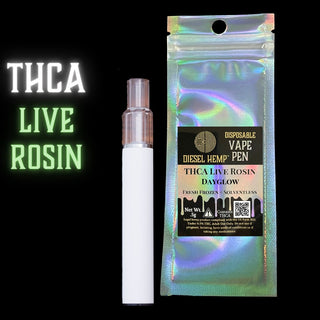
- THCA Live Rosin — solventless, first press above 70% THCA
Frequently Asked Questions
What strain is Carbon Fiber a cross of?
Carbon Fiber is a three-way Cannarado Genetics cross: (Cookies and Cream × Grape Pie) × Biscotti. Cookies and Cream supplies the creamy vanilla-dough base, Grape Pie the berry and the purple coloration, and Biscotti — itself a Girl Scout Cookies descendant — the black pepper, the gas and the bud density.
Is Carbon Fiber a sativa or indica strain?
Neither — it's a balanced hybrid, roughly 50% indica and 50% sativa. The onset leans sativa (euphoric, talkative, clear-headed) and the back half leans indica (physical calm, appetite stimulation), which is why it works across a wider part of the day than most dessert hybrids.
Is the Carbon Fiber strain strong?
Yes. Carbon Fiber typically tests between 20% and 25% THC, putting it firmly in high-potency territory. The sweet, smooth flavor makes it easy to consume more than intended, so start with two or three draws and wait before continuing.
What makes the Carbon Fiber strain special?
Three things: the appearance (dark graphite-green buds with a metallic trichome sheen that gave the strain its name), the three-way parentage stacking Cookies and Cream, Grape Pie and Biscotti, and an unusually high CBG content for a modern hybrid — commonly reported around 1%.
What are the downsides of the Carbon Fiber strain?
Dry mouth and dry eyes are the most common. At higher doses the potency can tip into anxiety for people sensitive to THC, and the indica half can bring on more sedation than expected. It also converts to delta-9 THC when heated, so it will show on a drug test.
What does Carbon Fiber taste like?
Sweet grape and berry with a creamy vanilla-dough note on the inhale, then diesel and black pepper on the exhale. There's a faint earthy minerality in the finish that separates it from straightforward dessert strains.
Will Carbon Fiber show up on a drug test?
Yes. Standard drug tests screen for THC metabolites and cannot distinguish hemp-derived THCA flower from dispensary cannabis once it has been heated. Anyone subject to testing should avoid it.
Related Strains
- Biscotti — a direct parent; the source of the pepper and the density
- GSC (Girl Scout Cookies) — the cookie backbone further up the family tree
- Grape Ape — for the grape-forward side of the profile
- Oreoz — the closest cousin on the cookies-and-cream flavor axis
- Gelato Cake — another dessert hybrid with a heavier indica finish
- GMO — if the savory, gassy half is what you're after
- Browse the Full Diesel Hemp Encyclopedia


