


What Is CBDA (Cannabidiolic Acid)?
CBDA — short for cannabidiolic acid — is the raw, acidic compound the living hemp plant actually makes before any heat ever touches it. It's the chemical parent of CBD: nothing in the plant produces CBD directly, so every drop of CBD you've ever taken started life as CBDA. Because Diesel Hemp's full-spectrum extract is never decarboxylated, that raw CBDA is preserved in our non-decarboxylated CBDA soft gels — the potency on the label is even written as "CBDa + CBD total."
If you've spent any time in the cannabinoid world, you already know the big names — THC, CBD, and increasingly minor cannabinoids like CBG and HHC. CBDA sits a step earlier in the story. It's one of the cannabinoid acids the plant builds first, and only later, with heat or time, does it shed part of its structure to become the CBD everyone talks about.
Shop Diesel Hemp


CBDA Properties & Quick Facts
Here's the short version before we go deeper.
- Compound type: Cannabinoid acid (the raw, acidic precursor form)
- Converts into: CBD, via decarboxylation (heat/time)
- Intoxicating?: No — like CBD, CBDA is non-intoxicating and won't get you high
- Where it's found: Raw, unheated hemp and cannabis flower and leaves
- How it works in the body: Does not bind CB1/CB2 directly; instead inhibits the COX-2 enzyme and interacts with 5-HT1A serotonin receptors
- Stability: Less stable than CBD — degrades faster with heat, light, and air
- Legal status: Hemp-derived CBDA with under 0.3% THC is federally legal under the 2018 Farm Bill
CBDA vs CBD: What's the Difference?
The difference between CBD and CBDA comes down to one small piece of chemistry with a big practical impact. CBDA carries an extra carboxyl group (a -COOH ring) that CBD does not. When CBDA is heated — smoked, vaped, baked, or processed — it loses that carboxyl group as carbon dioxide and becomes CBD. That reaction is called decarboxylation, and it's a one-way street: CBDA can become CBD, but CBD never turns back into CBDA.
So in plain terms: CBDA is the raw acidic precursor, and CBD is what you get after heat converts it. A few things follow from that.
- Source: CBDA dominates in fresh, raw, unheated hemp. CBD shows up once that plant material has been heated, aged, or extracted with heat.
- How they act in the body: CBD interacts broadly with the endocannabinoid system. CBDA takes a different route — it doesn't bind CB1/CB2 receptors directly, but research shows it inhibits the COX-2 enzyme and engages 5-HT1A serotonin receptors.
- Stability: CBD is the more stable, shelf-friendly molecule. CBDA is more fragile and will slowly convert to CBD on its own over time.
- The entourage idea: Researchers describe CBDA and CBD working together as an "entourage effect," where the raw acid and its decarboxylated form may complement each other.
This is also why "CBD vs CBDA" isn't really a contest. They're two stages of the same molecule. The interesting question isn't which is "better" — it's whether a product keeps the raw CBDA intact or converts it all to CBD during manufacturing.
Raw vs Decarboxylated Hemp: How CBDA Occurs in the Plant
The hemp plant doesn't actually manufacture CBD. What it builds is CBDA, starting from an even earlier precursor — cannabigerolic acid, or CBGA, the so-called "mother cannabinoid" that also feeds into the THC and CBG pathways. Enzymes inside the living plant route CBGA toward CBDA, and that's where it sits until something converts it.
"Decarboxylation" sounds technical, but you trigger it constantly. The fast version is heat — a flame, an oven, a vape coil. The slow version happens on its own: time, light, and oxygen will gradually nudge CBDA toward CBD even at room temperature, which is part of why raw CBDA is harder to keep stable. Raw hemp is CBDA-rich; heated or aged hemp is CBD-rich.
That single fact is the entire reason raw juicing of fresh hemp leaves became a wellness trend, and the reason a product's manufacturing process matters: a heat-driven extraction converts CBDA into CBD, while a gentler, non-decarboxylated process leaves the raw CBDA intact. Diesel Hemp's full-spectrum soft gel extract falls in the second camp — it's not decarboxylated, so it retains its naturally occurring CBDA right alongside the CBD.
What the Research Says About CBDA
This is the part to read carefully, because the science around CBDA is genuinely interesting but still early — most of it is preclinical (cell and animal studies), not finished human medicine. Nothing here is a health claim about any product. It's a summary of what researchers have studied.
- COX-2 / inflammation pathways: Unlike most cannabinoids, CBDA is studied as a selective inhibitor of the COX-2 enzyme — the same enzyme family targeted by common anti-inflammatory drugs. Researchers have explored this as a possible anti-inflammatory mechanism. (PubMed Central review)
- 5-HT1A serotonin receptor / nausea: In animal models, CBDA has been studied for anti-nausea and anti-anxiety effects via the 5-HT1A serotonin receptor, with some studies reporting it activates that receptor far more potently than CBD does. (NIH / PubMed Central)
- The Oregon State spike-protein study: In 2022, researchers at Oregon State University (led by Richard van Breemen, published in the Journal of Natural Products) reported that the cannabinoid acids CBDA and CBGA bound to the SARS-CoV-2 spike protein in laboratory tests, blocking a step the virus uses to enter cells. This was lab research, not a treatment finding. (Oregon State University newsroom)
- Context & caveats: Cannabinoid-education resource Project CBD has a useful plain-language overview of where CBDA research stands and how much is still preliminary. (Project CBD: CBDA — The Raw Story)
So when people search "CBDA benefits," what they're really finding is a list of things researchers are studying — not approved uses. The FDA has not approved CBDA to treat, prevent, or cure anything, and the most honest framing is that this is an active, promising, but unfinished area of research.
Is CBDA Legal?
For practical purposes, yes — when it comes from hemp. The 2018 Farm Bill removed hemp (cannabis containing no more than 0.3% delta-9 THC by dry weight) from the federal definition of marijuana. CBDA derived from compliant hemp falls under that same umbrella, just like hemp-derived CBD, CBG, and other non-intoxicating cannabinoids.
The usual fine print applies: state laws vary, the FDA has not approved over-the-counter CBDA or CBD products as supplements or drugs, and product quality is only as good as the testing behind it. That's why a current Certificate of Analysis (COA) matters — it's how you confirm what's actually in the bottle. For the federal source language, see the FDA's overview of cannabis-derived products.
CBDA at Diesel Hemp
Most CBD products convert all their CBDA to CBD during manufacturing. Diesel Hemp's CBD soft gels are different by design: the full-spectrum extract is not decarboxylated, so the raw cannabidiolic acid is preserved alongside the CBD. That's why the potency on our non-decarboxylated CBDA soft gels is labeled as "CBDa + CBD total" rather than CBD alone — and why every batch is backed by a Certificate of Analysis.
To be clear, that's a description of what's in the product, not a health promise. We're telling you the chemistry — raw, COA-verified, full-spectrum hemp extract that keeps its CBDA — and letting the research above speak for itself.
- CBD Soft Gels — full-spectrum, non-decarboxylated extract that retains naturally occurring CBDA (labeled "CBDa + CBD total"), COA-backed.
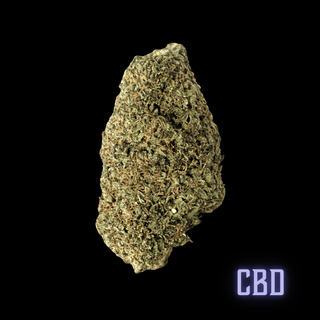
- CBD Flower — raw, high-CBD hemp flower, the natural home of cannabinoid acids like CBDA before any heat is applied.
→ Experience it yourself — shop Diesel Hemp's CBD Flower
Frequently Asked Questions
What is CBDA?
CBDA (cannabidiolic acid) is the raw, acidic cannabinoid that hemp plants produce naturally. It's the chemical precursor to CBD — when CBDA is heated, it loses a carboxyl group and converts into CBD. Like CBD, it's non-intoxicating.
What is CBDA good for?
Researchers are studying CBDA for its interaction with the COX-2 enzyme and the 5-HT1A serotonin receptor, mostly in early cell and animal studies. These are areas of active research, not approved or proven uses, and no CBDA product is approved to treat any condition.
What is the difference between CBD and CBDA?
CBDA is the raw acidic form that the plant makes first; CBD is what CBDA becomes after heat (decarboxylation) removes its carboxyl group. CBDA is more abundant in raw, unheated hemp, while CBD is more abundant in heated or aged hemp. CBDA is also less stable and converts to CBD over time.
Does CBDA get you high?
No. CBDA is non-intoxicating, just like CBD. The compound responsible for the cannabis "high" is THC, which is a different cannabinoid entirely.
Are there side effects of CBDA?
Research on CBDA in humans is limited. As with CBD, cannabinoids can interact with how the body metabolizes certain medications (via the CYP3A4 enzyme), so anyone taking prescription drugs should talk to a healthcare provider before using cannabinoid products. This is general information, not medical advice.
Does Diesel Hemp's product contain CBDA?
Yes. Diesel Hemp's full-spectrum soft gel extract is not decarboxylated, so it retains naturally occurring CBDA — which is why the potency is labeled "CBDa + CBD total" and backed by a Certificate of Analysis.
Related Encyclopedia Entries
- CBG (Cannabigerol) — derived from CBGA, the same "mother" acid that also feeds the CBDA pathway.
- THCA Flower — the THC-side mirror of CBDA: raw THCA converts to THC just as CBDA converts to CBD.
- HHC — another minor cannabinoid in the modern hemp lineup.
- THCP — a potent minor cannabinoid for the research-curious.
- Delta 10 — a lesser-known cannabinoid worth understanding alongside CBDA.
- Harlequin — a classic high-CBD hemp strain, naturally rich in cannabinoid acids like CBDA.
- Cherry Abacus CBD Flower — raw CBD-dominant flower where CBDA occurs before decarboxylation.
- Browse the Full Diesel Hemp Encyclopedia
Disclaimer: These statements have not been evaluated by the Food and Drug Administration. This product is not intended to diagnose, treat, cure, or prevent any disease. The information in this article is for educational purposes only and is not medical advice.


