


THCP: The Cannabinoid Behind the "33x Stronger Than THC" Claim — and What That Number Actually Measured
THCP — tetrahydrocannabiphorol — is the cannabinoid that arrived in 2019 with a headline attached: thirty-three times stronger than THC. That number is real, it comes from a genuine peer-reviewed paper, and almost every page selling THCP describes it wrongly. It measured how tightly the molecule binds to a receptor in a dish. It did not measure how high it gets you. The difference matters, and it is the reason this page exists.
A 360° look at golden crystalline cannabinoid concentrate.
Quick Facts
In short: A genuinely potent cannabinoid that exists in trace amounts naturally, is made semi-synthetically for sale, and is meaningfully stronger than THC per milligram — just nowhere near thirty-three times.
- What it is: Δ9-tetrahydrocannabiphorol, a phytocannabinoid identified in 2019
- Structure: Identical to Δ9-THC except for a seven-carbon side chain instead of five
- Natural concentration: Roughly 0.002%–0.014% — trace amounts only
- How it's sold: Semi-synthetic, converted from hemp CBD. "THCP flower" is hemp infused with distillate
- Real-world strength: Anecdotally 5–10x THC per milligram; the mouse data suggests closer to 2x
- Starting dose: 1–2 mg, versus 10 mg for THC
- Drug test: Assume you will fail. It metabolises to THC-type metabolites
- Legal: Federal hemp redefinition takes effect December 11, 2026; Tennessee banned it January 1, 2026 — see below
- At Diesel Hemp: THCP flower by the pound for wholesale accounts, 8 strains, batch COA on every pound
THCP Flower — Wholesale Pounds
Greenhouse $545/lb · Sungrown $465/lb · batch COA on every product page · wholesale accounts — apply here.
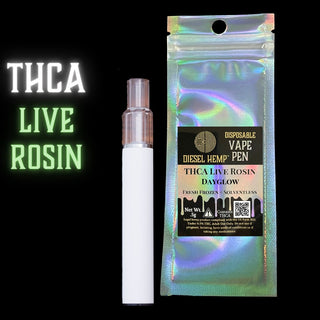
THCA Live Rosin Vape Pen (.5g)
From $44.00
SHOP NOW →
Lemonati · Greenhouse
$545 / lb
VIEW + COA →
South Florida OG · Greenhouse
$545 / lb
VIEW + COA →Platinum Bubba Kush · Greenhouse
$545 / lb
VIEW + COA →
Mimosa · Sungrown
$465 / lb
VIEW + COA →
Florida Kush · Sungrown
$465 / lb
VIEW + COA →
King Louie OG · Sungrown
$465 / lb
VIEW + COA →
Strawberry Cough · Sungrown
$465 / lb
VIEW + COA →
Super Lemon Haze · Sungrown
$465 / lb
VIEW + COA →What Is THCP?
THCP is a naturally occurring cannabinoid first isolated in 2019 by a team of Italian researchers working on the FM2 medical cannabis variety. Structurally it is Δ9-THC with one modification: the alkyl side chain hanging off the molecule is seven carbons long instead of five. At the time of discovery it was the longest such chain found in any natural cannabinoid.
That single change matters because the side chain is largely what determines how well the molecule fits into the CB1 receptor — the receptor responsible for the psychoactive effects of cannabis. A longer chain seats more securely. THCP seats very securely indeed.
What it does not mean is that THCP is a fundamentally different kind of compound. It is THC's longer-limbed cousin, doing the same job at the same receptor, harder.
The 33x Claim, Explained Properly
This is the section every other page owes you and does not deliver.
The original research is Citti and colleagues, "A novel phytocannabinoid isolated from Cannabis sativa L. with an in vivo cannabimimetic activity higher than Δ9-tetrahydrocannabinol: Δ9-Tetrahydrocannabiphorol," published in Scientific Reports in 2019. It is good science. It is just being quoted badly.
What the number measured
The 33x figure is a binding-affinity ratio, measured in vitro on cloned human CB1 receptors. THCP recorded a Ki of 1.2 nM against THC's 40 nM. At CB2 the gap was smaller — roughly five to ten times.
Binding affinity describes how tightly a molecule docks into a receptor. That is all it describes.
What the number does not mean
- Not 33x the high. Affinity is not efficacy. How tightly something binds is a separate question from how hard it activates the receptor once bound.
- Not 33x the dose equivalence. A dish of cloned receptors has no liver, no bloodstream and no blood-brain barrier. Absorption and metabolism are not in the measurement.
- Not a human finding at all. There are, as of now, zero human potency trials for THCP.
What the in-vivo data actually showed
The same paper ran a mouse tetrad test — the standard screen for cannabis-like activity, measuring reduced movement, catalepsy, pain response and body temperature. THCP produced THC-like effects at around 5 mg/kg where THC needed roughly 10 mg/kg.
That is about twice as potent, in a living animal. Not thirty-three times.
The honest position: THCP is stronger than THC per milligram. Consumer reports cluster around five to ten times, which sits between the mouse figure and the binding number and is probably the most useful working estimate. It is enough that dosing needs to change completely. It is not the order-of-magnitude leap the marketing implies, and anyone quoting 33x as a potency figure either has not read the paper or is counting on you not having read it.
Where THCP Comes From
Naturally, barely anywhere. Commercially, a laboratory.
In the plant, THCP occurs at roughly 0.002% to 0.014% by weight in THC-dominant varieties, and is generally undetectable in CBD-dominant ones. The FM2 variety it was discovered in carried about 29 micrograms per gram. To extract a usable quantity from flower directly you would need an implausible amount of biomass.
So commercial THCP is semi-synthetic. It is manufactured by converting hemp-derived CBD isolate through acid and solvent chemistry into the target molecule. This is the same broad production route used for most of the novel hemp cannabinoids on the market.
Two practical consequences:
- "THCP flower" is not a plant. It is ordinary hemp flower infused with THCP distillate. No cultivar produces meaningful THCP on its own. If a seller implies otherwise, that is a red flag about everything else they tell you.
- Process quality varies enormously. Semi-synthetic conversion leaves residual solvents and reaction by-products if done badly. This is the single strongest argument for buying only from sellers who publish a full batch COA including a residual solvent panel.
THCP Flower, Vapes and Gummies: What's Actually in the Box
THCP shows up in four formats, and the honest description of each is the same: a carrier plus THCP distillate.
- THCP flower. The biggest category by volume. Hemp flower — usually a CBD or low-THC cultivar — infused with THCP distillate, sometimes alongside THCA or delta-8. A finished-flower COA will typically read a few percent THCP; a sheet that reads 20%+ is usually reporting total cannabinoids, so ask which number you are looking at. Ours is no exception to the category: real hemp flower (greenhouse or sungrown), infused, with a batch COA on every pound.
- THCP vapes and carts. The fastest-growing format. Most "THCP carts" are a delta-8 or THCA base with a small THCP fraction — makers report using as little as 1.5–2% THCP in a cart, because that is all it takes.
- THCP gummies. Where regular THC gummies run 5–10 mg, THCP gummies usually cap at 1–2 mg per piece. A gummy labelled 30 mg "THCP blend" is mostly other cannabinoids.
- THCP distillate and dabs. The raw ingredient. The only format where you are consuming THCP more or less neat, and the one with the least margin for a dosing mistake.
One more thing worth knowing: a 2024 lab analysis of a commercial THCP vape found delta-9 THCP alongside delta-8 THCP, CBDP, other THCP isomers and compounds the researchers described as consistent with synthetic production. The label said THCP. The cartridge said a mixture. That is the whole argument for a batch COA in one sentence.
THCP Effects: What Users Actually Report
Strong, long, and physical. The consistent picture across user reports is THC-like in character but heavier in degree.
- Intense euphoria in the opening phase, frequently described as more overwhelming than a comparable THC dose.
- Heavy body load — significantly more physical weight than most THC products deliver.
- Sedation as the session runs, often strongly.
- Time distortion, reported more often with THCP than with THC.
- Anxiety, paranoia and racing heart at higher doses. These are common rather than rare, and they are the main reason to start very low.
Onset and duration
- Inhaled: two to ten minutes to onset, peaking around thirty minutes, lasting roughly three to five hours.
- Edibles: forty-five minutes to two hours to onset, lasting six to twelve hours or more.
That edible duration is longer than a comparable THC edible, and it is where most bad experiences come from. Someone takes a THCP gummy, feels nothing at ninety minutes, takes another, and then has eight to twelve hours to regret it.
→ See the eight THCP flower strains we carry by the pound

Commercial THCP arrives as distillate or crystalline concentrate — never as a naturally high-THCP flower.
How Much THCP Should You Take?
Less than you think, and this is the part of the page that actually protects you.
- Start at 1–2 mg. A standard THC edible dose is 10 mg. Treat THCP at roughly a fifth to a tenth of that as your opening position.
- Never redose an edible inside two hours. Onset can run to two hours. The redose is the classic mistake and the consequences last most of a day.
- Not for THC-naive users. If you have no tolerance baseline, you have no way to judge what is happening. Start with THC and learn your response first.
- Clear your schedule the first time. Six to twelve hours from an edible is a genuine commitment.
- Do not drive. The duration alone means impairment outlasts most people's expectations by hours.
There are no reported deaths from cannabinoid overconsumption, and THCP is not an exception to that. But the clinical picture is harsher than the forum picture. Vanderbilt's poison control center reported in October 2025 that THCP intoxications it sees run more severe and longer than delta-9 THC, with multi-day hospital stays in adults and children — and pediatric cases requiring intubation for respiratory depression. Keep it locked away from kids the way you would any medication, and treat 5 mg as a high dose, not a starting one.
Is THCP Legal?
This is the fastest-moving part of the subject, and the part every ranking page currently ignores.
Hemp-derived THCP has existed in the gap opened by the 2018 Farm Bill: hemp is defined by its Δ9-THC content — not more than 0.3% by dry weight — and THCP is not scheduled by name. A cannabinoid made from compliant hemp, that is not itself Δ9-THC, has therefore occupied a grey zone rather than a clear prohibition.
That window is closing. Federal legislation signed in November 2025 (Public Law 119-103) redefines hemp: it excludes cannabinoids synthesized or manufactured outside the plant, caps finished products at 0.4 mg total THC per container, and extends that cap to any cannabinoid with similar effects or marketed as having them. The original compliance date was November 12, 2026; the Senate has voted to push it to December 11, 2026, and we cover what that delay does and doesn't change. Semi-synthetic THCP sold for its THC-like effect is squarely inside the new definition's scope. We keep the running federal and state picture on our hemp THC legal status page.
States are already ahead of the federal clock. Tennessee banned THCP in any amount effective January 1, 2026, per Vanderbilt's poison-control bulletin linked above, and a growing list of states restrict intoxicating hemp derivatives regardless of federal status. State law is where most buyers actually get caught out.
Before buying: check your own state's current position, and understand that federal availability is on a clock. Legal status on this page reflects the position as of October 2026 and is not legal advice.
THCP and Drug Tests
Assume you will fail.
Standard workplace panels do not look for THCP by name. They look for THC-COOH, the metabolite produced when the body processes THC. THCP metabolises to closely related compounds, and immunoassay screens are not selective enough to tell the difference reliably.
There is no meaningful sense in which THCP is a "test-safe" alternative to THC, and any seller suggesting otherwise is either uninformed or dishonest. If you are subject to testing, this is not the cannabinoid for you.
THCP vs THC, THCA, Delta-8 and Delta-9
- THCP vs Δ9-THC: Same receptor, same broad effect, longer side chain, stronger per milligram. THC is well characterised in humans; THCP is not.
- THCP vs THCA: Different question entirely. THCA is the raw acidic form of THC found in living flower — non-intoxicating until heat converts it. THCP is already active. "Does THCP get you higher than THCA" compares a finished cannabinoid with a precursor; once you apply heat to THCA you are comparing THCP against ordinary THC, and the answer is yes, per milligram. THCA flower is also a plant; THCP flower is an infusion.
- THCP vs delta-8: Delta-8 is usually reported as half to two-thirds the strength of Δ9-THC; THCP is several times stronger than Δ9. Put another way, the gap between a delta-8 gummy and a THCP gummy of the same milligram count is enormous, which is exactly why THCP gummies are dosed at 1–2 mg. Our delta-8 flower is the gentle end of the infused-flower range.
- THCP vs HHC: HHC is generally reported as somewhat milder than Δ9-THC; THCP is clearly stronger. They sit at opposite ends of the novel-cannabinoid range.
- THCP vs Delta-10: Delta-10 is the mild, clear-headed end of the category. Not a close comparison.
Buying THCP: What Actually Matters
- Demand a batch-specific COA. Not a generic one, not last quarter's. THCP mislabeling is documented, and stated potency has been found well off actual content.
- Check for a residual solvent panel. This is a semi-synthetic product. The conversion chemistry is where contamination happens, and a potency-only COA does not cover it.
- Treat "THCP flower" honestly. It is infused hemp. That is fine — just know what you are buying and price it accordingly.
- Ignore any 33x potency claim on the label. A seller repeating that number is telling you they either have not read the study or are relying on you not to.
- Buy small first. Given the dose sensitivity and the duration, the cost of getting it wrong is a whole day.
THCP Flower at Diesel Hemp
We carry THCP flower by the pound for wholesale accounts — eight strains across two tiers. Greenhouse (Lemonati, Platinum Bubba Kush, South Florida OG) at $545/lb, and Sungrown (Florida Kush, King Louie OG, Mimosa, Strawberry Cough, Super Lemon Haze) at $465/lb. Each is real hemp flower infused with THCP distillate, and each product page links the batch-specific COA, because that is the standard we just told you to hold every seller to. Browse the Wholesale Pounds collection or apply for a wholesale account.
Buying for yourself rather than a shelf? Retail THCP sizes are coming. Until then, THCA flower — the naturally occurring precursor to Δ9-THC, in actual cannabis flower with a published COA on every batch and no conversion chemistry — is the honest alternative, and it is the one we grow ourselves.
Shop Diesel Hemp
- THCP Flower — Wholesale Pounds — eight strains, greenhouse and sungrown, COA on every pound.
- THCA Flower — the full lineup, each batch with a published COA.
- THCA Pre-Rolls — the same quality flower, pre-rolled and ready.
- THCA Diamonds — potent concentrate for full flavor and strength.
Frequently Asked Questions
Does THCP get you high?
Yes. THCP is a full CB1 agonist like THC and is intoxicating at doses well below a standard THC dose. User reports describe a THC-like high that is heavier, more physical and longer-lasting, with anxiety and racing heart common above a few milligrams. Treat 1–2 mg as a starting dose.
Does THCP get you higher than THCA?
Per milligram, yes — but the comparison needs unpacking. THCA is the raw, non-intoxicating acid form found in living cannabis flower; it only becomes psychoactive when heat converts it to Δ9-THC. So the real comparison is THCP against ordinary THC, and there THCP is meaningfully stronger — anecdotally five to ten times per milligram. A high-THCA flower and a THCP product are different categories of thing rather than two points on one scale.
Is delta 9 or THCP stronger?
THCP, per milligram. How much stronger is genuinely unsettled: the widely quoted 33x figure is a receptor binding measurement taken in a dish, not a potency measurement in a person. The only living-animal data, from the original mouse study, suggests roughly twice as potent. User reports cluster around five to ten times. Treat five to ten as the working estimate and dose accordingly.
How safe is THCP?
There are no reported fatalities from cannabinoid overconsumption, and no evidence THCP is an exception. The real risks are dose-related and practical: intense anxiety, paranoia, racing heart, green-outs and a next-day hangover, all common above roughly 5 mg. Vanderbilt's poison control center has reported THCP intoxications running more severe and prolonged than delta-9 THC, including hospital stays and pediatric respiratory depression. There are no human safety trials, and because it is semi-synthetic, product quality depends on manufacturing you cannot see without a full COA. Start at 1–2 mg, never redose an edible inside two hours, keep it away from children, and avoid it entirely if you are THC-naive.
Is THCP addictive?
Nobody has studied THCP dependence directly. It acts on the same receptor as THC, more strongly, so the reasonable assumption is that it carries at least THC's potential for tolerance and cannabis use disorder — and heavier CB1 activation is generally associated with faster tolerance. Daily use is the risk factor that matters most.
What does THCP do?
It binds to the CB1 receptor — the same receptor THC acts on — and does so far more tightly because of its longer seven-carbon side chain. The subjective result is THC-like but heavier: strong euphoria, a pronounced body load, sedation, and frequently time distortion. Inhaled effects run three to five hours; edibles run six to twelve or more.
Is THCP natural or synthetic?
Both, depending on what you are holding. THCP occurs naturally in cannabis at roughly 0.002% to 0.014% — far too little to extract commercially. Every THCP product on the market is therefore semi-synthetic, made by converting hemp-derived CBD through acid and solvent chemistry. "THCP flower" is ordinary hemp flower infused with that distillate, not a plant that produces THCP on its own.
Will THCP show up on a drug test?
Almost certainly yes. Standard panels screen for THC-COOH, the metabolite of THC. THCP breaks down into closely related metabolites and immunoassay tests cannot reliably distinguish them. There is no credible basis for treating THCP as test-safe. If you are subject to testing, avoid it.
How much THCP should I take?
Start at 1 to 2 milligrams — roughly a fifth to a tenth of a standard 10 mg THC dose. Wait a full two hours before considering more if you have taken an edible, because onset can run that long and the redose mistake costs you the rest of the day. Not recommended for anyone without an existing THC tolerance.
Is THCP legal?
As of October 2026 hemp-derived THCP sits in a federal grey area created by the 2018 Farm Bill, which defines hemp by Δ9-THC content and does not schedule THCP by name. Public Law 119-103, signed November 2025, redefines hemp to exclude synthesized cannabinoids and caps total THC and similar-effect cannabinoids at 0.4 mg per container, with a compliance date now set for December 11, 2026. Tennessee banned THCP outright on January 1, 2026, and many other states restrict intoxicating hemp derivatives. Check your state's current law and treat federal availability as time-limited. This is not legal advice.
How long does THCP last?
Inhaled: onset in two to ten minutes, peak around thirty minutes, total duration three to five hours. Edibles: onset in forty-five minutes to two hours, duration six to twelve hours or longer. The edible duration is notably longer than comparable THC products, and underestimating it is the most common way people have a bad time with this cannabinoid.
Is THCP stronger than HHC?
Considerably. HHC is usually reported as somewhat milder than Δ9-THC, while THCP is clearly stronger. They sit at opposite ends of the novel cannabinoid range, and a dose that suits one is badly wrong for the other.
Can I buy THCP from Diesel Hemp?
Yes, by the pound. We carry eight THCP flower strains for wholesale accounts — greenhouse at $545/lb and sungrown at $465/lb — each with a batch-specific COA linked on the product page. Retail sizes are coming. For individual orders today, our THCA flower is the natural, lab-tested alternative and ships direct with free shipping over $75.
Related Entries
- THCA — the natural precursor we grow ourselves, and the honest comparison point.
- EPN (Euphorinol) flower — the other "Super Sativa" infused flower we carry by the pound, and how it differs.
- THCV — another minor cannabinoid with a shorter side chain and very different effects.
- HHC — the milder end of the novel cannabinoid range.
- Delta-10 — the clear-headed, low-intensity comparison.
- CBG — a non-intoxicating minor cannabinoid, at the opposite end of the spectrum.
- CBDA — another acidic precursor, and a useful contrast with THCA.
- Browse the Full Diesel Hemp Encyclopedia


