


Want the real THC experience? Our Permanent Marker THCA flower is an indica-leaning hybrid known for deep body relaxation, grown in Colorado by Diesel Hemp and partner farms, from $89 $65. Shop Permanent Marker →
CBN vs THC: Does CBN Get You High? (2026)
CBN (cannabinol) does not reliably get you high, and THC does. In a lab test on human CB1 receptors, the receptors behind the cannabis high, CBN reached only 29% of the maximum response compared with 72% for THC, and it needed about 10 times more drug to do it. In a 1975 human study, 50 mg of CBN alone did not make volunteers feel drugged, drunk, dizzy or drowsy, while 25 mg of THC did.
So CBN is best described as weakly psychoactive at the receptor level but not intoxicating at the doses people take. The catch: CBN is made from THC as cannabis ages, many CBN products contain THC on purpose, and CBN can still trigger a drug test. Below: a THC vs CBN vs CBD table, how CBN forms, what each one feels like, what happens when you take CBN and THC together, sleep research, drug tests, side effects, and 11 FAQs.
Disclosure: Diesel Hemp sells THCA flower, delta 9 THC gummies, CBD and other hemp-derived cannabinoid products, so we have a stake in this topic. That is why this page sticks to what the studies found, and every number below links to its source.
By Marc Brannigan, COO & co-founder of Diesel Hemp · Updated November 9, 2026 · Part of our CBN and sleep series
Shop Diesel Hemp
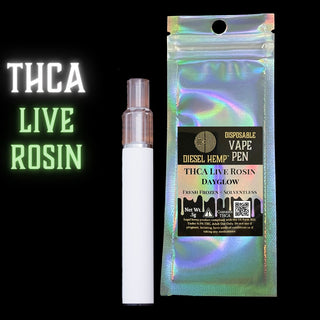
Live Rosin Disposable Vape Pen (.5g) — THCA
From $39.00
SHOP NOW →
THCA Flower – Permanent Marker
$89 $65

Delta 9 THC Gummies – Hippie Speedball (Sativa)
From $29
SHOP NOW →
Full-Spectrum CBD Gummies (20mg)
$14.99
SHOP NOW →
Full-Spectrum CBD Soft Gels (25mg)
$29 $22
21+ only. We do not ship to Colorado. Free shipping on orders over $75. All sales are final, except a broken vape device is replaced. Hippie Speedball is a daytime sativa gummy with added plant caffeine; for the evening, the flower or CBD options fit better.
THC vs CBN vs CBD at a Glance
| THC (delta 9) | CBN (cannabinol) | CBD (cannabidiol) | |
|---|---|---|---|
| Gets you high? | Yes, dose-dependent | Not at studied doses on its own (50 mg showed no high in Karniol 1975) | No |
| Action at CB1 (the "high" receptor) | Partial agonist, 72% max response in Arnold 2025 | Weak partial agonist, 29% max response; about 10% of THC's affinity (Kishi 2026) | Low affinity; works mostly through other targets such as serotonin 5-HT1A receptors (Kishi 2026) |
| Where it comes from | Heat converts THCA in raw flower into THC | THC breaks down into CBN with age, air, light and heat | Heat converts CBDA into CBD |
| Typical product dose | Varies widely; start low | 5 mg or less in most sleep products (Corroon 2021); 20–300 mg in trials | Varies widely |
| Sleep research | Mixed; combined THC products studied | 20 mg nightly cut awakenings (Bonn-Miller 2024); 300 mg sped sleep onset (Lavender 2026) | Adding it to CBN did not help in Bonn-Miller 2024 |
| Drug test risk | High, it is what tests target | Can cross-react with 2 common urine screens (Kroner 2020) | Full-spectrum products may contain trace THC |
Sources linked in each cell. "Max response" is relative to a full synthetic agonist (CP 55,940) in Arnold et al.'s human CB1 membrane-potential assay.
The number that matters: two years of storage took cannabis resin from 35.16% THC and 0.87% CBN to 2.74% THC and 6.94% CBN in a 2025 study of 150 seized samples. CBN is what THC turns into, and it is far weaker.
Is CBN Psychoactive?
CBN is weakly psychoactive at the receptor level but is not intoxicating at normal doses. It binds the CB1 receptor with about 10% of THC's affinity, according to a 2026 review in PCN Reports, and most human studies found no THC-like high from CBN alone.
That is why websites disagree. Some call CBN "non-psychoactive," while others say it gives a mild high. Both are half right. "Psychoactive" means a compound affects the brain. "Intoxicating" means it makes you high. CBN acts on the brain weakly, but at the doses people actually take, it does not reliably make them high.
The lab numbers show the gap clearly. In Arnold et al. (2025, Neuropsychopharmacology), CBN produced a maximum response of 29% at human CB1 receptors, with a potency score (pEC50) of 5.4. THC produced 72%, with a pEC50 of 6.4. Each point on that scale is a 10-fold difference, so THC was roughly 10 times more potent and more than twice as strong at its peak. The same authors note that most human studies of CBN "reported no Δ9-THC-like intoxicating effects."
What other sites get wrong
You will see CBN described as "25 percent as potent as THC" on GreenState and "approximately 10% as potent" on Slumber's site, often with no study attached. The 10% figure lines up with receptor data. One brand blog, Natural Ways CBD, goes further and says CBN "creates a high effect." The human studies below do not support that for CBN on its own.
Does CBN Get You High?
CBN by itself does not get most people high. In Karniol et al. (1975), five men took 50 mg of oral CBN and reported no drugged, drunk, dizzy or drowsy feeling, while 25 mg of THC produced all four. If a CBN product gets you high, the THC in it is the most likely reason.
The human evidence is small and old, so it is worth laying out exactly what was tested:
| Study | Who | Dose | Did CBN cause a high? |
|---|---|---|---|
| Karniol et al. (1975) | 5 male volunteers | 50 mg CBN oral; 25 mg THC; combinations | No. CBN alone did not raise heart rate or cause a drugged feeling. Added to THC, volunteers felt more drugged, drunk, dizzy and drowsy than on THC alone |
| Hollister & Gillespie (1975) | Volunteers | 20 mg THC + 40 mg CBN oral | CBN produced "no detectable changes in the quality, intensity, or duration" of THC's effects |
| Bonn-Miller et al. (2024) | 293 adults analyzed | 20 mg CBN nightly for 7 nights | No change in daytime fatigue compared with placebo |
| Corroon (2021) review | 8 human studies reviewed in detail | Various | Evidence that CBN causes cannabis-like effects is "mixed, with the majority of available evidence demonstrating a lack of such an effect" |
Animal research adds a caution. Mice trained to recognize THC's effects treated CBN as partly THC-like in a 2024 study, and as fully THC-like at the doses used in a 2026 study that also found tolerance and withdrawal signs after five days of repeated dosing. Mouse doses are much higher than what people take, but it means very large CBN doses may feel different from small ones.
Does CBN get you buzzed?
Not on its own at the doses studied. In the 1975 Karniol study, 50 mg of CBN alone produced no "drugged" or "drunk" ratings, so a buzz from a CBN product most likely comes from the THC in it.
When the same volunteers took CBN with 25 mg of THC, they felt more drugged and drowsy than on THC alone (Karniol 1975). Check the lab report for delta-9 THC per serving; our CBN gummies guide shows what to look for.
Why big doses might feel stronger: the 11-OH-CBN metabolite
Your liver turns some CBN into 11-hydroxy-CBN (11-OH-CBN). In rats, this metabolite reached brain levels about equal to CBN itself, and at human CB1 receptors it acted much like THC: a 75% maximum response with a pEC50 of 6.0, close to THC's 72% and 6.4 (Arnold 2025). That could explain why some people say high-dose CBN edibles feel mildly "off." It has not been tested in a human high study yet.
How Is CBN Made From THC?
CBN forms when THC oxidizes. Air, light, heat and time slowly convert THC into CBN, which is why old cannabis has more CBN and less THC. The CUPID sleep trial describes CBN as "an oxidative by-product of Δ9-tetrahydrocannabinol."
The chain starts in the living plant, which makes THCA, not THC. Heat from a flame, vape or oven removes a carboxyl group and turns THCA into delta 9 THC; by weight, THCA converts to THC at a factor of 0.877. Our guide to THCA vs THC covers that step, and our encyclopedia entry on CBN (cannabinol) covers the compound itself. Over time, THC loses hydrogen atoms (oxidizes) and becomes CBN, which cannot be turned back into THC.
- Storage: In the Fettoukh 2025 resin study, THC fell from 35.16% to 2.74% after two years in storage while CBN rose from 0.87% to 6.94%. Forensic labs use the THC-to-CBN ratio to estimate how old a sample is.
- Heat: In a 2026 ACS Omega study of hemp flower heated to vaporization temperatures (up to 230 °C), up to 3% CBN formed in THC-rich material as THC broke down.
- Manufacturing: Most CBN sold in gummies and oils is made on purpose by converting other cannabinoids in a lab, because fresh flower contains very little.
For you as a smoker, the takeaway is simple: flower that sits in a hot, bright, open container loses THC and gains CBN. That is one reason old weed feels weaker and sleepier, and why we tell customers to store flower in a sealed glass jar, cool and dark.

What Does CBN Feel Like Compared With THC?
THC usually brings euphoria, changed time perception, a faster heart rate and, at higher doses, impairment. CBN on its own usually feels like very little. Human studies found no THC-like high and no change in heart rate from CBN alone, and a 20 mg nightly dose did not cause next-day tiredness.
| Effect | THC | CBN alone |
|---|---|---|
| Euphoria / high | Yes | Not reported in human studies at 40–50 mg |
| Heart rate | Increased in Karniol 1975 | No change |
| Time perception | Volunteers underestimated a minute | No effect |
| Drowsiness | Reported at 25 mg | Not reported at 50 mg alone; sleep effects seen at 20–300 mg in newer trials |
| Impairment / driving | Do not drive | Unknown; many CBN products contain THC, so do not drive |
If you want to understand the THC side in more depth, read our encyclopedia entries on delta 9 THC and whether THCA gets you high. Terpenes also shape how any cannabis product feels. Myrcene, for example, is common in strains people describe as relaxing.
Can You Take CBN and THC Together?
Yes, and many "sleep" gummies and tinctures combine them. In people, CBN changed THC's effects only a little: one 1975 study found the combination felt somewhat more drugged and drowsy than THC alone, while another found no change at all. In mice, CBN reduced THC's effects.
Here is what each study saw when the two were combined:
- Karniol 1975: 25 mg THC + 50 mg CBN felt more drugged, drunk, dizzy and drowsy than 25 mg THC alone, but the authors called the added effects "small."
- Hollister & Gillespie 1975: 20 mg THC + 40 mg CBN felt the same as THC alone.
- Vanegas 2026 (mice): giving CBN with THC weakened THC's effects.
- Walsh 2021: a nightly under-the-tongue extract combining THC, CBN and CBD for two weeks improved insomnia scores (−5.07 points) and self-reported sleep time (+64.6 minutes) vs placebo in 23 adults. 36 of the 40 mild side effects happened on the active extract.
The practical point: in a CBN + THC product, plan around the THC. It is the ingredient that makes you high, affects driving and shows up on a drug test. Read the label for milligrams of each, check the lab report, and start with a small serving. Our guide on how to read a COA works for any cannabinoid product. For dosing THC at night, see how much THC for sleep, and for CBN amounts, our CBN dosage chart.
Want the non-intoxicating route?
Diesel Hemp Full-Spectrum CBD Soft Gels (25 mg) — $29 $22. Every capsule holds the same 25 mg, so you always know what you took. Made from our strain-specific full-spectrum hemp extract. This is a CBD product, not a CBN product, and full-spectrum hemp can contain trace THC.
21+ only. We do not ship to Colorado. Free shipping on orders over $75.
Is CBN or THC Better for Sleep?
Neither has strong proof, but CBN now has more sleep trials of its own. A 2024 trial found 20 mg of CBN nightly reduced nighttime awakenings in 293 adults, and a 2026 sleep-lab trial found 300 mg shortened the time to fall asleep while 30 mg did nothing measurable. THC research mostly tests THC mixed with other cannabinoids.
What the CBN trials show:
- Bonn-Miller 2024: 20 mg CBN for seven nights reduced awakenings and overall sleep disturbance vs placebo. It did not help people fall asleep faster, and adding 10, 20 or 100 mg of CBD did not improve results.
- Lavender 2026 (CUPID): in 20 adults with insomnia, neither 30 mg nor 300 mg changed the main measure, time awake after falling asleep. 300 mg did shorten sleep onset and improve rated sleep quality. There were 247 mild-to-moderate side effects across all arms.
THC tends to make people drowsy at higher doses (the 25 mg arm in Karniol 1975), but it also impairs you and builds tolerance. A 2026 review found THC is "strongly and dose-dependently associated with adverse psychiatric outcomes," while evidence for CBN "remains minimal." Our full breakdown is in CBN for sleep and THC for sleep, and if you are weighing a supplement, CBN vs melatonin.
Does CBN Have THC in It?
Pure CBN contains no THC, but many CBN products do. Some add THC on purpose, and full-spectrum hemp extracts can carry trace amounts. The only way to know is the product's lab report (COA), matched to your batch.
Check three things on the label and COA: milligrams of CBN per serving, milligrams of delta 9 THC per serving, and whether the extract is isolate, broad-spectrum or full-spectrum. "Isolate" and "broad-spectrum" usually mean THC was removed, but verify it on the COA. A 2021 review found most CBN sleep products contained 5 mg of CBN or less per serving, far below the 20–300 mg used in trials, so a product that "works" at 5 mg may be working because of its THC. Our CBN gummies guide shows how to read these labels.
Will CBN Show Up on a Drug Test?
It can. A 2020 study in the Journal of Applied Laboratory Medicine found CBN cross-reacts with two common urine screening tests built to detect THC. It took about 5 times more CBN than THC metabolite to trigger the EMIT II Plus test and about 20 times more for the Microgenics test, and CBN added to THC's signal.
Lab confirmation tests (mass spectrometry) can tell CBN from THC metabolite, but a positive screen still means hassle, and any THC in the product is a real positive. CBN also lingers: after a single 20 mg dose, its half-life was 32 hours by IV and 43 hours when smoked in a 1987 study. If you are drug tested, skip CBN and THC products. Our page on CBN and drug tests goes deeper, and the same logic applies to THCA.
Is CBN Good for Anxiety?
No clear benefit has been shown. In a 2024 randomized trial of about 1,020 adults, 25, 50 and 100 mg of CBN nightly did not change anxiety scores compared with placebo, although the 100 mg group reported a larger drop in stress.
That trial (Kolobaric et al., 2024, Pharmaceuticals) was built around sleep and measured anxiety as a secondary outcome, but it is the only randomized CBN trial that measured anxiety at all. THC is more dose-dependent: in one study, 7.5 mg of oral THC reduced distress after a stress test, while 12.5 mg increased negative mood. Our full review is in CBN for anxiety.
CBN vs THC Side Effects
CBN's side effects in trials were mostly mild, such as drowsiness and dizziness. THC's are better known: dry mouth, red eyes, a faster heart rate, impaired coordination and memory, and anxiety or paranoia at high doses.
- Impairment: Do not drive after THC, and treat CBN + THC products the same way.
- Medications: Both are processed by liver enzymes. A 2025 J Med Chem study showed CBN is metabolized by liver CYP enzymes, the same family that handles many prescription drugs. Ask a pharmacist if you take medication.
- Tolerance: THC tolerance is well documented, and a 2026 mouse study found tolerance and dependence signs with repeated high-dose CBN.
- Who should avoid both: anyone under 21, pregnant or nursing, or with a history of psychosis, and anyone subject to drug testing.
Which Should You Choose: CBN, THC or CBD?
- You want to feel high: THC. CBN will not get you there on its own. Start with a small amount of THCA flower or a delta 9 gummy, and see microdosing THC for a low-dose approach.
- You want no high: CBD or CBN. Compare them in CBN vs CBD, and read about CBG, another non-intoxicating option.
- You want help winding down: look at the trial doses before buying, and remember most CBN products are dosed far lower than the trials. Indica-leaning edibles are covered in our indica gummies guide.
- You are anxious about THC: start very low, or choose CBD. Our page on CBN for anxiety covers how little anxiety research exists for CBN.
Drinks and edibles behave differently from smoked flower, with a slower onset and longer effect. Our comparison of delta 9 drinks vs seltzers vs edibles explains the timing.
What We Could Not Verify
Being clear about gaps is part of a fair comparison. The human studies on whether CBN gets you high are from 1975 and involved a handful of volunteers. No modern trial has measured "feeling high" from CBN at the 100–300 mg doses some products now sell, and the 11-OH-CBN findings come from rats and cell assays. A 1973 intravenous CBN study is often quoted for potency, but no abstract was available for us to check, so we left it out. We did not lab-test any CBN product ourselves.
Frequently Asked Questions
Is CBN psychoactive?
CBN is weakly psychoactive at the receptor level but is not intoxicating at normal doses. It binds the CB1 receptor with about 10% of THC's affinity, and in a 2025 lab study it reached a 29% maximum response at human CB1 receptors versus 72% for THC. Most human studies found no THC-like high from CBN alone.
Does CBN get you high?
CBN by itself does not get most people high. In a 1975 study, five men took 50 mg of oral CBN and reported no drugged, drunk, dizzy or drowsy feeling, while 25 mg of THC produced all four. If a CBN product gets you high, the THC in it is the most likely reason.
Is CBN stronger than THC?
No. THC is much stronger. In a 2025 human-receptor study, THC was roughly 10 times more potent than CBN at the CB1 receptor and produced more than twice the maximum response (72% vs 29%). CBN is what THC breaks down into as cannabis ages.
Does CBN have THC in it?
Pure CBN contains no THC, but many CBN products do. Some add THC on purpose, and full-spectrum hemp extracts can carry trace amounts. Check the product's lab report (COA) for milligrams of delta 9 THC per serving before you buy.
Can you take CBN and THC together?
Yes, and many sleep gummies combine them. In one 1975 study, 50 mg of CBN with 25 mg of THC felt somewhat more drugged and drowsy than THC alone; in another, 40 mg of CBN did not change the effects of 20 mg of THC. Plan around the THC, since it causes the high and the drug test risk.
How much CBN will get you high?
No studied human dose of CBN alone has been shown to cause a THC-like high. Volunteers felt no high at 50 mg in 1975, and 20 mg nightly did not cause next-day fatigue in a 2024 trial. Doses of 100 to 300 mg have not been tested for a high, and a CBN metabolite acts like THC in lab tests, so very large doses may feel different.
Will CBN show up on a drug test?
It can. A 2020 study found CBN cross-reacts with two common urine screens designed to detect THC, needing about 5 to 20 times more CBN than THC metabolite to trigger a positive. Many CBN products also contain THC. If you are drug tested, avoid CBN products.
Is CBN or THC better for sleep?
Neither has strong proof, but CBN has more trials of its own. In a 2024 trial of 293 adults, 20 mg of CBN nightly reduced nighttime awakenings, and in a 2026 sleep-lab trial 300 mg shortened the time to fall asleep while 30 mg did nothing measurable. THC can cause drowsiness but also impairment and tolerance.
Does THC turn into CBN?
Yes. THC oxidizes into CBN with air, light, heat and time. In a 2025 study of stored cannabis resin, THC fell from 35.16% to 2.74% after two years while CBN rose from 0.87% to 6.94%. That is why old weed tends to feel weaker and sleepier.
What does CBN feel like compared with THC?
CBN on its own usually feels like very little. In human studies it did not cause a high, did not raise heart rate and did not change time perception, while THC did all three. People mainly use CBN for winding down at night.
What is the difference between THC, CBD and CBN?
THC is the main intoxicating cannabinoid and acts strongly on CB1 receptors. CBN forms when THC ages and acts on CB1 only weakly, about 10% of THC's affinity. CBD has low affinity for cannabinoid receptors and does not get you high. Of the three, only THC reliably causes a high.
About the author
Marc Brannigan is COO & co-founder of Diesel Hemp and has been cultivating cannabis for over 25 years — from founding Los Suenos, a large outdoor cannabis farm in southern Colorado, to CBDRx, whose hemp crop earned USDA organic certification in 2015. He oversees breeding, cultivar selection, and every product Diesel Hemp grows. Diesel Hemp's flower is grown in Colorado by Diesel Hemp and partner farms and ships with third-party lab results. Meet the whole team →
Studies checked November 9, 2026 through Europe PMC and the publishers' pages. This article is for education only and is not medical or legal advice. Cannabis products are for adults 21+. These statements have not been evaluated by the FDA.


