


Delta 8 THC: Is It Bad for You, Is It Synthetic, Is It Real Weed? Straight Answers
Delta 8 THC is a naturally occurring cannabinoid that is almost never made naturally. That contradiction is the source of every question people bring to this page: is delta 8 bad for you, is it synthetic, is it real weed, does it get you high, is it safe? The honest version: delta 8 is a real cannabis compound, a weaker cousin of ordinary THC, that the plant produces in traces too small to harvest — so virtually every delta 8 product on the market was made by chemically converting CBD. Whether that is a problem depends almost entirely on who did the converting and whether they tested what came out. We sell delta 8 flower, so this page tells you what the FDA says, what the chemistry is, and how to tell a clean product from a bad one, without pretending the category has no issues.
Quick Facts
In short: Delta 8 is an isomer of delta 9 THC — same atoms, one double bond moved — with roughly half to two-thirds the potency and a calmer, less anxious character. It is "natural" in the sense that cannabis makes it, and "synthetic" in the sense that your gummy was made from CBD in a reactor. The risk is not the molecule; it is unregulated manufacturing.
- Is it real weed? It is real THC from the cannabis plant family. It is not the same as dispensary flower, which is delta 9.
- Does it get you high? Yes. About half as strong as delta 9 per milligram; 20–25 mg delta 8 ≈ 10 mg delta 9.
- Is it synthetic? Made by converting CBD, yes. The output molecule is identical to the plant's own delta 8.
- Is it safe? The molecule, broadly. The product only if it has a full-panel COA: residual solvents, heavy metals, and the delta 9 line.
- Drug test: yes, it shows up. Full guide.
- Clock: converted cannabinoids lose federal hemp status December 11, 2026.
Delta 8 Flower — Infused, Not Sprayed
Colorado-grown hemp flower infused with lab-tested delta 8. Full COA on every product page. Free shipping over $75. 21+.
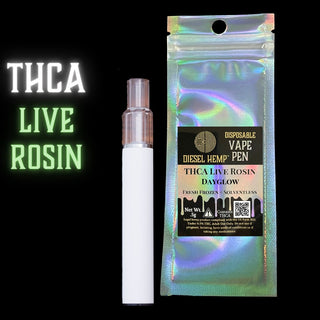
THCA Live Rosin Vape Pen (.5g)
From $44.00
SHOP NOW →
Delta 8 Flower – Strawberry Diesel
From $20.00
SHOP NOW →
Delta 8 Flower – Garlic Breath
From $20.00
SHOP NOW →
Delta 8 Flower – Blue Genius
From $20.00
SHOP NOW →
Delta 8 Flower – Lemon Diesel
From $55.00
SHOP NOW →
Delta 9 Gummies – Hippie Speedball
From $29.00
SHOP NOW →What Is Delta 8 THC?
Delta-8-tetrahydrocannabinol is one of over a hundred cannabinoids in Cannabis sativa. Structurally it is delta 9 THC with the double bond on the eighth carbon of the ring instead of the ninth. That shift changes how tightly it binds the CB1 receptor — less tightly — which is why the effect is milder, and it makes the molecule more chemically stable, which is why delta 8 shows up in old cannabis as delta 9 degrades. The plant makes it directly only in trace amounts, typically well under 1%.
Delta 8 became a national product in 2020 for one reason: CBD was cheap after the 2018 Farm Bill crashed its price, and CBD can be converted to delta 8 with an acid catalyst. A legal, intoxicating THC product made from a legal, oversupplied input was the hemp industry's answer to its own glut, and it is now the second-largest hemp cannabinoid category behind THCA.
Is Delta 8 Real Weed?
It is a real cannabis cannabinoid, and delta 8 flower is real hemp flower with delta 8 distillate infused into it. It is not "weed" in the sense most people mean — dispensary flower whose high comes from delta 9 THC the plant grew. Nobody grows delta 8 flower; the bud is CBD hemp and the delta 8 is added. That is also true of every delta 8 gummy, cart and tincture. The experience is a THC experience, roughly half-strength, with the character of the strain's terpenes on top. If what you want is the plant's own full-strength THC, that is THCA flower, not delta 8.
Is Delta 8 Synthetic or Natural?
Both, and the distinction matters more now than it did a year ago.
- Natural, in origin. Cannabis produces delta 8. It is not a lab-invented molecule like THC-O acetate or the spice-type synthetic cannabinoids (JWH-018 and the like), which do not exist in the plant at all.
- Synthetic, in manufacture. Commercial delta 8 is made by dissolving CBD isolate in a solvent, adding an acid (p-toluenesulfonic acid is common), heating, then neutralizing and purifying. The product is chemically identical to plant delta 8 — but it was synthesized outside the plant, and the reaction also produces delta 9, delta 10, iso-THCs and unidentified byproducts that have to be removed.
The federal hemp definition that takes effect December 11, 2026 draws exactly this line: cannabinoids the plant can produce but that were synthesized outside it are excluded from hemp. CBD-converted delta 8 is the textbook case. Several states (Georgia, Tennessee) already exclude "synthetic cannabinoids" from hemp and read converted delta 8 as falling on that side. So the "natural or synthetic" question is not academic: it is the legal status of the product.
Is Delta 8 Bad for You?
Separate the molecule from the product.
The molecule. Delta 8 is a THC. Its acute risks are THC's: impairment, anxiety or panic at high doses, racing heart, dry mouth, red eyes, and with heavy daily use, tolerance and dependence. There is far less research on delta 8 than delta 9, but no evidence that the molecule itself carries risks delta 9 does not. At the doses people use, the main danger of the molecule is driving or working while impaired.
The product. This is where the real concern sits, and the FDA's delta 8 consumer notice is blunt about it: manufacturers "may use potentially unsafe household chemicals" in the conversion, byproducts can remain, and production sometimes happens in "uncontrolled or unsanitary settings." The numbers the FDA cites:
- 2,362 poison control exposures involving delta 8 between January 1, 2021 and February 28, 2022; 41% were children, 70% required evaluation at a healthcare facility, and one pediatric case was coded as a death.
- 104 adverse event reports to the FDA in roughly the same window; 55% required intervention or hospital admission.
Read those carefully. The pediatric cases are overwhelmingly accidental ingestion of candy-styled products, which is a packaging and storage problem. The adult cases cluster around overconsumption and contaminated or mislabeled product. Neither is a property of delta 8 the molecule; both are properties of an unregulated market. The practical translation: delta 8 from a producer who publishes a full-panel COA and packages it like an adult product is a reasonable choice for an adult; delta 8 from a gas station with no lab report is a gamble on somebody's reactor chemistry.
Is Delta 8 Safe?
Safe enough for an adult who is not tested for work, buys from a producer who publishes a full-panel COA, doses conservatively and stores it away from kids. Not safe in the sense of FDA-evaluated — nothing in hemp is. The checklist that separates clean product from the rest:
- Full-panel COA, batch-specific. Potency alone is not enough. You want residual solvents, heavy metals, and ideally a scan for unidentified cannabinoid peaks — those are the conversion byproducts.
- Delta 9 on the COA. Every conversion leaves some. The number should be small and the product should still test under 0.3%.
- Infused, not sprayed (for flower). Sprayed flower has hot spots, tastes like oil, and gums a grinder. Infused flower looks and smokes like flower.
- Child-resistant packaging and 21+ sales. If the brand sells gummies that look like candy in a resealable baggie, it is the brand the FDA numbers are about.
Our delta 8 flower is Colorado-grown hemp infused (not sprayed) with lab-tested delta 8, and the COA with the delta 8 and delta 9 lines is on every product page.
Does Delta 8 Get You High?
Yes. It is a THC and it binds the same receptors. Most people describe it as about half as strong as delta 9, with a smoother, more body-forward, less anxious character — "delta 9's nicer younger sibling" is the phrase that stuck from the largest user survey. It is the cannabinoid people reach for when delta 9 makes them paranoid. Onset is 5–10 minutes smoked, 45–90 minutes as an edible; duration 2–4 hours smoked, 4–8 as an edible.
Dose: smoked, a bowl of 15–20% delta 8 flower is comparable to a bowl of mid-strength dispensary flower. Edibles: 10–15 mg delta 8 for a first time, 25 mg as a standard adult dose (roughly a 10 mg delta 9 gummy). Do not stack edibles inside two hours. Do not mix with alcohol; do not drive.
Delta 8 vs Delta 9
Delta 9 is the full-strength original and can be extracted from the plant without changing it; delta 8 is the milder isomer and is made by conversion. Delta 9 hits harder and faster and is more likely to produce anxiety; delta 8 is calmer and more sedating. Both show up identically on a drug test. Both are legal under the current federal hemp rule if the product is under 0.3% delta 9, and both face the December 11 total-THC cap, but converted delta 8 is additionally caught by the synthesized-outside-the-plant exclusion. Full breakdown in Delta 8 vs Delta 9 vs Delta 10; the delta 9 story on its own is in the Delta 9 THC entry.
Does Delta 8 Show Up on a Drug Test?
Yes, and reliably. Delta 8 metabolizes into a compound the standard THC immunoassay cannot distinguish from the delta 9 metabolite, and every delta 8 product carries some delta 9 anyway. A single use clears urine in 2–5 days; daily use can read positive for a month or more. If you are tested for work, delta 8 is not a workaround. The complete guide — urine, blood, saliva and hair windows, lab cutoffs, what does and does not work before a test — is our Delta 8 Drug Test entry.
Is Delta 8 Addictive?
It can be, the way THC can be. Cannabis use disorder is real at roughly 9% of users overall and higher for daily users, and there is no reason to think delta 8 is different; its weaker binding does not make it non-habit-forming. Withdrawal after heavy daily use looks like THC withdrawal: irritability, poor sleep, low appetite for a week or two. Taking tolerance breaks and keeping it to evenings are the simple controls.
Is Delta 8 Legal?
Federally, today, delta 8 from hemp at or under 0.3% delta 9 by dry weight is legal under the 2018 Farm Bill — though the DEA has long argued that converted delta 8 is a synthetic cannabinoid outside that protection, and roughly twenty states ban or restrict it outright. Texas made it a controlled substance on July 31, 2026; Tennessee removed it from hemp in July 2026; Georgia excludes synthetic cannabinoids and bans smokable hemp. On December 11, 2026, Public Law 119-103 brings the new federal definition into force: a 0.4 mg total-THC cap per container and an exclusion for cannabinoids synthesized outside the plant. Converted delta 8 fails both. Our dated state guides cover Georgia, Florida, North Carolina, Texas and Tennessee; the federal picture is on our hemp THC legal status page. General information, not legal advice.
→ Shop infused, lab-tested delta 8 flower with the COA on every page
Delta 8 at Diesel Hemp
We infuse our own Colorado-grown hemp flower with lab-tested delta 8 distillate — infused rather than sprayed, so there are no hot spots and no chemical taste — and publish the full COA with the delta 8 and delta 9 percentages on every product page. We have been direct on this page about the category's problems because our customers read COAs, and because the alternative is you finding out from a bad batch somewhere else.
Why Buy Delta 8 From Diesel Hemp
- Infused, not sprayed — even distribution, smooth smoke, no oily hot spots
- Colorado-grown base flower from a breeder, not a reseller
- Published COAs on every product page, delta 8 and delta 9 lines included
- Free shipping on orders over $75, in discreet packaging
- Veterans discount program — proud to support those who served
Shop Diesel Hemp
- Delta 8 Flower — Strawberry Diesel, Garlic Breath, Blue Genius, SpecDiesel, Lemon Diesel.
- Delta 9 THC Gummies — full-strength, full-spectrum.
- THCA Flower — the plant's own THC, grown not converted.
- CBD Flower — the non-intoxicating option.
Frequently Asked Questions
Is delta 8 bad for you?
The molecule carries THC's usual risks — impairment, anxiety at high doses, dependence with heavy use — and no evidence of risks beyond delta 9's. The real hazard is unregulated manufacturing: the FDA logged 2,362 poison control exposures in 14 months, mostly accidental pediatric ingestion and contaminated or mislabeled product. Buy from a producer with a full-panel COA and store it away from children.
Is delta 8 synthetic?
It is a natural cannabinoid made synthetically. Cannabis produces delta 8 in trace amounts, but commercial delta 8 is manufactured by chemically converting CBD. The resulting molecule is identical to the plant's; the process is where contaminants come from, and it is why converted delta 8 loses federal hemp status on December 11, 2026.
Is delta 8 real weed?
It is a real cannabis THC, but delta 8 flower is CBD hemp flower with delta 8 added, not a plant that grew it. Dispensary weed is delta 9 THC the plant produced. Delta 8 is a milder, converted cousin.
Is delta 8 safe?
For an adult who is not drug-tested, buys from a producer with a batch-specific full-panel COA, doses conservatively and keeps it away from kids, yes in the ordinary sense. It is not FDA-evaluated, and products without lab reports carry real contamination risk.
Does delta 8 get you high?
Yes, at roughly half to two-thirds the strength of delta 9 per milligram, with a calmer, more body-forward character. 25 mg of delta 8 is comparable to a 10 mg delta 9 gummy. Onset is 5–10 minutes smoked, 45–90 minutes eaten.
Does delta 8 make you high like regular weed?
Similar family of effect, lower intensity and less anxiety. People who get paranoid on delta 9 often prefer delta 8; people who want full strength find it underwhelming.
Is delta 8 addictive?
It can be habit-forming the same way THC is. Roughly 9% of cannabis users develop a use disorder, higher among daily users, and delta 8's weaker binding does not exempt it. Withdrawal after heavy daily use looks like THC withdrawal for one to two weeks.
Does delta 8 show up on a drug test?
Yes. Its metabolite cross-reacts with the standard THC screen, and every delta 8 product contains some delta 9. A single use clears urine in 2–5 days; daily use can read positive for 30 days or more.
Is delta 8 legal?
Federally legal today under the 2018 Farm Bill if under 0.3% delta 9, but around twenty states ban or restrict it, Texas made it a controlled substance in July 2026, and the federal definition changes on December 11, 2026 to exclude converted cannabinoids. Check your state.
What is the difference between delta 8 and delta 9?
One double bond position. Delta 9 is the plant's primary THC, full strength, extractable without conversion. Delta 8 is the milder isomer, roughly half as potent, made by converting CBD. Both show up on drug tests.
About the Author
Marc Brannigan is co-founder of Diesel Hemp, a Colorado hemp breeder and grower. Diesel Hemp sells infused, lab-tested delta 8 flower and publishes the full cannabinoid panel on every product page. This entry draws on the FDA's delta 8 consumer update, the 2018 Farm Bill, Public Law 119-103 and published cannabinoid pharmacology; it is general information, not medical or legal advice. 21+.
Related Entries
- Delta 8 Drug Test — detection windows, cutoffs and what actually works before a test.
- Delta 9 THC — the full-strength original and why hemp-derived delta 9 is legal.
- Delta 8 vs Delta 9 vs Delta 10 — the three THCs compared.
- Delta 10 and HHC — the other converted cannabinoids.
- THCA Flower — the plant's own THC, grown rather than made.
- Browse the Full Diesel Hemp Encyclopedia


