


Does Delta 8 Show Up on a Drug Test? Yes — Here Is Why, and How Long It Stays
Delta 8 THC will show up on a drug test. Not "might." Will. A standard workplace urine screen is not looking for delta 9 THC itself; it is looking for the metabolite your body makes after processing THC, and delta 8 breaks down into an almost identical metabolite that the test cannot tell apart. "It's federally legal hemp" is true and it does not matter to the test. If you have a screen coming up, this entry covers exactly what the test sees, how long delta 8 stays detectable in urine, blood, saliva and hair, what changes those windows, and which "detox" shortcuts are a waste of money. We sell delta 8 flower, so it is in our interest to be honest about this up front rather than have you find out the hard way.
Quick Facts
In short: Delta 8 is metabolized into 11-nor-9-carboxy-Δ8-THC, which cross-reacts with the THC-COOH antibodies in every standard immunoassay. The screen flags it as THC. A confirmation test (GC-MS or LC-MS) can distinguish delta 8 from delta 9, but most employers do not order one, and a delta 8 positive is still treated as a THC positive.
- Urine (the usual test): 2–5 days after a single use · 1–2 weeks for a few times a week · 30 days or more for daily use.
- Blood: hours to about 2 days; longer for heavy users.
- Saliva: 24–72 hours.
- Hair: up to 90 days.
- Cutoffs: 50 ng/mL on the initial urine screen, 15 ng/mL on confirmation (federal SAMHSA standard).
- Detox drinks, niacin, cranberry juice: no evidence any of them beat a test. Time does.
- Same answer for: delta 8 gummies, carts, flower, delta 9, delta 10, HHC and THCA flower. If it is a THC analog, assume it shows — THCA section below.
Delta 8 Flower — Infused, Not Sprayed
Colorado-grown hemp flower infused with lab-tested delta 8. COA on every product page. Free shipping over $75.
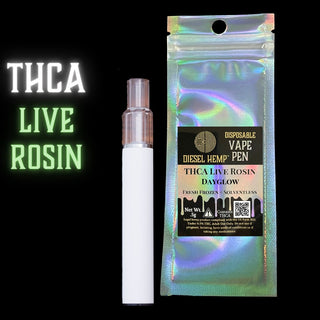
THCA Live Rosin Vape Pen (.5g)
From $44.00
SHOP NOW →
Delta 8 Flower – Strawberry Diesel
From $20.00
SHOP NOW →
Delta 8 Flower – Garlic Breath
From $20.00
SHOP NOW →
Delta 8 Flower – Blue Genius
From $20.00
SHOP NOW →
Delta 8 Flower – SpecDiesel
From $20.00
SHOP NOW →
Delta 8 Flower – Lemon Diesel
From $55.00
SHOP NOW →
Delta 9 Gummies – Hippie Speedball
From $29.00
SHOP NOW →Why Delta 8 Fails a THC Drug Test
Drug tests do not detect THC. They detect what your liver turns THC into. Delta 9 THC is metabolized to 11-hydroxy-THC and then to 11-nor-9-carboxy-THC (THC-COOH), a fat-soluble, inactive compound that lingers in the body for days to weeks and is excreted in urine. THC-COOH is the target of every standard cannabis panel.
Delta 8 THC is the same molecule as delta 9 with one double bond moved one carbon over. Your liver processes it the same way, producing 11-nor-9-carboxy-Δ8-THC — a metabolite that differs from THC-COOH by that single bond position. The initial drug screen is an immunoassay: an antibody engineered to bind THC-COOH. That antibody does not read bond positions; it binds the delta 8 metabolite nearly as well, and the test reads positive. Clinical toxicologists have been flagging this since 2021, when delta 8 products started showing up in positive THC results, and the FDA's delta 8 consumer notice states plainly that delta 8 has psychoactive and intoxicating effects similar to delta 9 — for testing purposes, the body agrees.
There is a second reason. Delta 8 is made from hemp CBD by isomerization, and that conversion is never 100% clean. Most delta 8 distillate contains some residual delta 9 THC (the legal limit is 0.3% by weight, but concentrated products can carry measurable amounts) plus other THC isomers. So even a hypothetical test that ignored the delta 8 metabolite would usually find delta 9 metabolites from the same product.
Can a Drug Test Tell Delta 8 From Delta 9?
The screen, no. The confirmation, yes — in theory. If a sample screens positive, the lab may run a confirmatory test by gas or liquid chromatography–mass spectrometry (GC-MS / LC-MS), which separates compounds precisely enough to distinguish the delta 8 metabolite from the delta 9 one. Several labs now report both. The catch:
- Most workplace and probation programs do not pay for a confirmation unless the result is being contested.
- Even when the lab reports "delta 8 THC metabolite," the employer's policy almost always reads "positive for THC" and treats it the same. There is no legal distinction in a zero-tolerance policy between federally legal delta 8 and illegal delta 9.
- Delta 8 products contain delta 9 anyway (see above), so the confirmation usually finds both.
Practically: a delta 8 positive is a THC positive. Do not plan on explaining it.
How Long Does Delta 8 Stay in Your System?
Detection windows for delta 8 are, as far as anyone has measured, the same as delta 9 — the metabolites are stored and cleared the same way. The dominant variable is not the product; it is how often you use it. THC-COOH is fat-soluble and accumulates in body fat with repeated use, then leaks back into the bloodstream slowly, which is why a daily smoker can test positive a month after quitting while a one-time user is clear in a few days.
| Test type | Single / occasional use | Regular (several times a week) | Daily / heavy use |
|---|---|---|---|
| Urine | 2–5 days | 7–15 days | 30+ days, occasionally 60+ |
| Blood | 2–12 hours (active THC); metabolites 1–2 days | 1–2 days | Up to a week or more |
| Saliva | 24 hours | 24–72 hours | Up to 72 hours, sometimes longer |
| Hair | Often not detected after one use | Up to 90 days | Up to 90 days (standard 1.5" sample) |
Ranges are drawn from delta 9 THC pharmacokinetic data and the limited delta 8 case literature; individual results vary widely. Treat the upper number as the planning number.
Urine tests
This is the test you will almost certainly face for a job, a probation check or a DOT physical. The initial screen cutoff is 50 ng/mL of THC-COOH; the confirmation cutoff is 15 ng/mL. A single 25 mg delta 8 gummy or a couple of bowls of delta 8 flower in someone who does not otherwise use THC will usually clear 50 ng/mL within 3–4 days. Someone who smokes every evening should assume a month, and heavy users with high body fat have tested positive past 60 days.
Blood tests
Blood tests look for active THC, not just metabolites, and are used mainly in DUI investigations and accidents because they reflect recent use. Delta 8 peaks in blood within an hour or two of smoking (longer for edibles) and drops below typical cutoffs in a day or two for occasional users. Chronic users carry a low baseline for considerably longer.
Saliva tests
Oral fluid swabs detect the parent THC left in the mouth and secreted into saliva rather than metabolites, which makes them a recent-use test: typically 24 hours for an occasional user, up to 72 hours for regular users. Smoking or vaping delta 8 leaves more residue in the mouth than an edible does, so flower and carts are more likely to flag a swab in the first day.
Hair tests
Hair follicle tests look back roughly 90 days using a 1.5-inch sample. They are good at identifying regular use and poor at catching a one-time use, because a single dose often does not deposit enough metabolite in the shaft to hit the cutoff. Hair tests are uncommon in standard employment screening but show up in some federal, financial and custody contexts.
What Changes How Long Delta 8 Stays Detectable
- Frequency. By far the biggest factor. Metabolites accumulate in fat with repeated use and clear slowly.
- Dose and product. A 100 mg gummy or a full gram of flower deposits more metabolite than a 10 mg gummy. Edibles are processed through the liver first and tend to produce more 11-hydroxy and carboxy metabolite per milligram than inhalation.
- Body fat. THC-COOH is lipophilic. More adipose tissue means a bigger reservoir and a longer tail.
- Metabolism and age. Faster metabolisms clear sooner; metabolic rate slows with age.
- Hydration and urine concentration. Dilute urine lowers the ng/mL reading; this is why labs check creatinine and specific gravity and will flag a sample as "dilute," which many employers treat as a retest or a fail.
- Exercise. Counterintuitively, hard exercise shortly before a test can release stored THC-COOH from fat and raise urine levels temporarily. Do not work out the day of a test.
- Delta 9 content of the product. Cheaper delta 8 with sloppy conversion carries more delta 9 and more unknown isomers, all of which the test reads.
Delta 8 Gummies, Carts and Flower: Does the Product Type Matter?
Not for the question "will it show up" — all of them do. It matters a little for how long. Edibles produce a larger, longer metabolite curve per milligram because the entire dose goes through first-pass liver metabolism, and edible doses are often higher (25–100 mg) than a few puffs. Smoking delta 8 flower or a cart gives a faster onset and a shorter blood window but leaves more parent THC in saliva. Hair tests do not care how you took it. If you are choosing a product with a test in mind, the right product is none of them.
Delta 8 vs Delta 9 vs Delta 10 vs HHC vs THCA on a Drug Test
People ask this hoping one of the hemp cannabinoids slips through. None of the THC analogs do:
- Delta 10 — same molecule family, same metabolic path, cross-reacts with the immunoassay. Shows up.
- HHC — hydrogenated THC. Some marketers claimed it is "undetectable" because its metabolite (11-nor-9-carboxy-HHC) is structurally different; published lab work since has found it does cross-react on standard screens and is readily confirmed by LC-MS. Assume it shows.
- THCA — becomes delta 9 THC the moment you light it. The test sees ordinary THC. Definitely shows up.
- THCP and THCV — less studied; THCP's longer side chain likely cross-reacts, and most THCP products contain delta 8 or delta 9 anyway. Treat as positive.
- CBD — pure CBD isolate does not trigger a THC panel. Full-spectrum CBD products contain up to 0.3% delta 9 THC and have caused positives with heavy daily use. Broad-spectrum and isolate are the safe choices, and only from brands that publish a COA.
Does THCA Show Up on a Drug Test?
Yes — and this one is not even a cross-reactivity question. THCA is the acid form of delta 9 THC that the plant makes. Raw, unheated THCA is not intoxicating and is not what the test looks for, but nobody fails a drug test from raw THCA because nobody consumes it raw: the moment you light, vape or bake THCA flower, it decarboxylates into ordinary delta 9 THC, your liver turns that into THC-COOH, and the screen reads it exactly as it would dispensary cannabis. There is no "it was hemp" defense on a lab report; the metabolite is identical.
Three THCA-specific points people get wrong:
- Eating raw THCA flower will not get you high, but can still test positive. Some THCA converts to delta 9 during digestion and processing, and raw flower always carries a small amount of delta 9 already. Treat any THCA product as a THC product for testing purposes.
- Detection windows are the delta 9 windows in the table above: 2–5 days for a single session, 7–15 days for regular use, 30 days or more for daily smokers. THCA flower is typically 20–30% THCA, which is dispensary-strength; a daily THCA flower smoker should plan on the heavy-user end of every range.
- THCA does not show up as "THCA" on the test. Labs do not screen for the acid. You will not be able to argue the positive came from a legal product, because the positive is for THC-COOH, full stop.
Hemp THCA flower testing under 0.3% delta 9 by dry weight was legal to buy under the original Farm Bill definition; that has nothing to do with what your employer's lab will find.
How to Pass a Drug Test After Delta 8 (What Works and What Doesn't)
There is one method with evidence behind it: stop using and let time pass. Everything sold as a shortcut falls into three groups.
Does not work
- Detox drinks and "cleanse" kits. These are diuretics plus B vitamins and creatine. They dilute your urine and then add color and creatinine back to hide the dilution. Modern labs measure specific gravity and creatinine and flag the sample; a flagged dilute sample is usually treated as a fail or a mandatory retest.
- Niacin. No effect on THC-COOH clearance, and high doses cause flushing, liver stress and, in documented cases, hospitalization.
- Cranberry juice, apple cider vinegar, lemon water, activated charcoal, sweating it out. Folk remedies. None change how fast fat releases stored metabolite.
- Synthetic urine. Observed collections, temperature checks and adulterant panels catch most of it, and substituting a sample is a crime in many states and a terminable offense everywhere.
Marginal at best
- Dilution with water the morning of. Drinking a lot of water a few hours before a test lowers ng/mL and can push a borderline sample under 50. It also drops creatinine and triggers the dilute flag. It is a gamble, not a method.
- Avoiding first-morning urine. The first void of the day is the most concentrated. Testing mid-day after normal hydration genuinely reads lower. Legitimate, small effect.
Works
- Abstinence. Occasional user: stop for a week to be safe. Regular user: 2–3 weeks. Daily user: 30–45 days, and buy a cheap home test kit to confirm before the real one.
- Home test kits. Drugstore THC strips use the same 50 ng/mL immunoassay cutoff as the lab screen and the same antibody, so they react to delta 8 the same way. A negative strip on a mid-day sample is the only reliable signal that you will pass.
What to Do If You Have a Test Coming Up
- Stop all THC products — delta 8, delta 9, delta 10, HHC, THCA, full-spectrum CBD — immediately.
- Count back honestly over how often you have used in the last month and use the table above to set your expectation.
- Buy a two-pack of home THC strips. Test a mid-day sample a few days before the real test.
- Do not exercise hard the day before or the day of.
- Hydrate normally. Not a gallon.
- If you test positive, know that "it was legal hemp" will not change a zero-tolerance outcome, and that requesting GC-MS confirmation only helps if your employer's policy distinguishes delta 8 — almost none do.
Who Should Avoid Delta 8 Entirely
If you are tested for work, this product is not for you — not for a weekend, not once. That includes DOT-regulated drivers, pilots, federal employees and contractors, active military (delta 8 is explicitly prohibited by the DoD), healthcare workers in tested roles, anyone on probation or parole, athletes under WADA or NCAA rules, and anyone in a custody dispute with testing. Federal legality does not exempt you from any of those programs, and most of them have explicitly named delta 8 in their policies since 2021–2022.
→ Not tested? Shop lab-tested delta 8 flower with the COA on every page
Is Delta 8 Legal? (And Why That Doesn't Help You on a Test)
Hemp-derived delta 8 with no more than 0.3% delta 9 THC by dry weight is federally legal under the 2018 Farm Bill today, though roughly twenty states ban or restrict it, and the federal hemp definition changes on December 11, 2026 under Public Law 119-103, which caps total THC per container and will remove most intoxicating delta 8 products from the legal hemp category. None of that touches drug testing. Employers, courts and licensing boards test for THC metabolites, and no policy we are aware of carves out legally sourced ones. We keep the running federal and state picture on our hemp THC legal status page. This is general information, not legal advice.
Delta 8 at Diesel Hemp
We infuse Colorado-grown hemp flower with lab-tested delta 8 — infused, not sprayed, so there are no hot spots and no chemical taste — and publish the COA on every product page so you can see the delta 8 and delta 9 numbers before you buy. If you are not subject to testing, it is the smoothest entry point into THC we sell. If you are, read this page again and shop our broad-spectrum CBD flower instead.
Why Buy Delta 8 From Diesel Hemp
- Infused, not sprayed — even distribution, smooth smoke, no hot spots
- Colorado-grown hemp flower from a breeder, not a reseller
- Published COAs on every product page, with delta 8 and delta 9 percentages listed
- Free shipping on orders over $75, in discreet packaging
- Veterans discount program — proud to support those who served
Shop Diesel Hemp
- Delta 8 Flower — Strawberry Diesel, Garlic Breath, Blue Genius, SpecDiesel, Lemon Diesel and more.
- Delta 9 THC Gummies — Hippie Speedball sativa gummies, hemp-derived and Farm Bill compliant.
- CBD Flower — the non-intoxicating option if you are tested.
Frequently Asked Questions
Does delta 8 show up on a drug test?
Yes. Delta 8 is metabolized into a compound almost identical to the delta 9 THC metabolite (THC-COOH) that standard drug screens detect, and the immunoassay antibody cannot tell them apart. A delta 8 user will test positive for THC.
How long does delta 8 stay in your urine?
About 2–5 days after a single use, 1–2 weeks for someone using a few times a week, and 30 days or more for daily users. Heavy users with higher body fat have tested positive past 60 days.
How long does delta 8 stay in your system?
It depends on the test. Urine: days to a month-plus depending on frequency. Blood: hours to about two days. Saliva: 24–72 hours. Hair: up to 90 days. Frequency of use matters far more than the product form.
Can a drug test tell the difference between delta 8 and delta 9?
The initial screen cannot. A confirmatory GC-MS or LC-MS test can separate the two metabolites, but most employers do not order one, and even when the lab reports delta 8 specifically, a zero-tolerance THC policy treats it as a positive.
Will one delta 8 gummy show up on a drug test?
It can. A single 25 mg gummy in someone who does not otherwise use THC typically clears the 50 ng/mL urine cutoff within 3–4 days, but it can read positive inside that window. Larger gummies (50–100 mg) and people with slower metabolisms take longer.
Does delta 8 show up on a hair follicle test?
With regular use, yes — hair tests look back about 90 days. A single use often does not deposit enough metabolite to hit the cutoff, but regular use will.
Does delta 8 show up on a saliva test?
Yes, for roughly 24–72 hours after use. Smoking or vaping delta 8 leaves more residue in the mouth than an edible, so flower and carts are more likely to flag a swab in the first day.
How can I pass a drug test after using delta 8?
Stop using and wait. Occasional users need about a week, regular users two to three weeks, daily users 30–45 days. Use a home THC test strip on a mid-day sample to confirm before the real test. Detox drinks, niacin and cranberry juice do not work, and diluting your urine gets flagged by the lab.
Does delta 8 show up on a military drug test?
Yes, and delta 8 is explicitly prohibited for service members under Department of Defense policy regardless of its federal legality under the Farm Bill. The same is true for DOT-regulated drivers and federal employees.
Is delta 8 legal if it fails a drug test?
Both can be true. Hemp-derived delta 8 is federally legal today, but employers, courts and licensing boards test for THC metabolites and do not distinguish legally sourced ones. Legality does not protect you from the consequences of a positive test.
Does HHC or delta 10 show up on a drug test?
Yes. Delta 10 is metabolized the same way as delta 8 and cross-reacts with the screen. HHC was once marketed as undetectable, but lab studies have since shown it also triggers standard THC panels. THCA becomes delta 9 THC when heated. Assume every THC analog shows up.
Does THCA show up on a drug test?
Yes. THCA converts to delta 9 THC when heated, and the test detects the delta 9 metabolite (THC-COOH). Smoking or vaping THCA flower produces the same positive, with the same detection windows, as dispensary cannabis. Even raw THCA can test positive because some converts during digestion and raw flower carries trace delta 9.
How long does THCA stay in your system?
The same as delta 9 THC, because that is what it becomes: about 2–5 days in urine after a single session, 1–2 weeks for regular use, 30 days or more for daily smokers. THCA flower is dispensary-strength (20–30%), so daily users should plan on the longer end.
Does CBD show up on a drug test?
Pure CBD isolate does not. Full-spectrum CBD products contain up to 0.3% delta 9 THC and have caused positive results with heavy daily use. If you are tested, choose broad-spectrum or isolate products from a brand that publishes a COA.
About the Author
Marc Brannigan is co-founder of Diesel Hemp, a Colorado hemp breeder and grower. Diesel Hemp sells lab-tested delta 8 flower and publishes the full cannabinoid panel, including delta 9 content, on every product page. This entry draws on the FDA's delta 8 consumer guidance, SAMHSA federal testing cutoffs, and published clinical toxicology on delta 8 metabolite cross-reactivity; it is general information, not medical or legal advice.
Related Entries
- Delta 8 THC and Delta 9 THC — what each one is, and the three-way comparison.
- HHC — the "undetectable" cannabinoid that turned out to be detectable.
- Delta 10 — delta 8's sativa-leaning sibling; same answer on a test.
- THCA Flower — raw THCA, and why it reads as plain THC once lit.
- THCP and THCV — the minor THC analogs and what the test likely sees.
- High CBD, Low THC Strains — where to look if you are tested.
- Browse the Full Diesel Hemp Encyclopedia


