


We sell THCA, the cannabinoid the plant makes itself, with a batch COA on every product. Our solventless live rosin vape pen starts at $49 $39. Shop THCA vapes →
Updated November 4, 2026 · By Marc Brannigan, COO & co-founder, Diesel Hemp · About our team
THCP vs THCA: The Short Answer
THCP is stronger than THCA per milligram, but not 33 times stronger. Raw THCA is not intoxicating; heat turns it into delta-9 THC at a factor of 0.877, so 1 g of 33.18% THCA flower carries about 291 mg of potential THC. THCP binds the CB1 receptor about 33 times more tightly than delta-9 THC in a test tube (Ki 1.2 nM vs 40 nM), and in mice it worked at roughly half the dose THC needs. THCA is the plant's own acid; the THCP you can buy is made by chemical synthesis, because plants contain only about 29 micrograms per gram.
That last point is what most THCP vs THCA pages skip. Nearly every ranking article repeats "THCP is 33x stronger than THC" as if someone measured it in people. Nobody has. The number comes from one 2019 laboratory binding assay, and the same paper's animal data point to something closer to 2x. Below: the at-a-glance table, what the 33x number really measures (with the paper's own figures), how each one is made, effects and onset, how much to take, side effects, how to read a COA for each, drug tests, the December 11, 2026 law change, and which one to choose.
Disclosure: Diesel Hemp sells THCA flower, live rosin and vapes at retail, and sells infused THCP flower by the pound to wholesale accounts. We are not neutral, so every number on this page links to its source. All products discussed are for adults 21+.
Shop Diesel Hemp
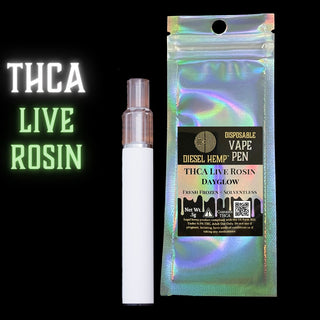
Live Rosin Disposable Vape Pen (.5g) — THCA
From $39.00
SHOP NOW →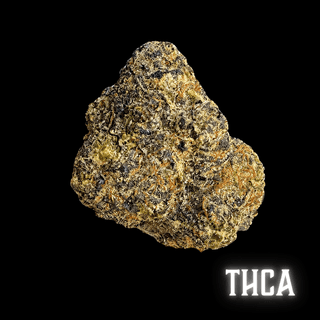
THCA Flower - Lemon Cherry Gelato
From $69.00
SHOP NOW →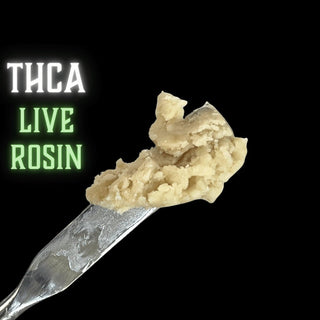
THCA Live Rosin - Dayglow Mousse (Premium)
From $44.00
SHOP NOW →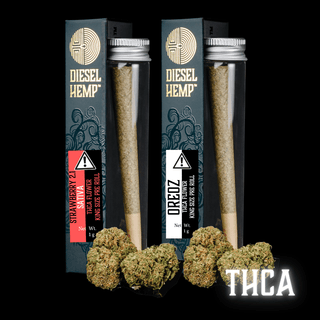
THCA Pre Roll – King Size
From $9.00
SHOP NOW →THCA products, each with a batch COA. Adults 21+. We do not ship to Colorado.
THCP vs THCA vs Delta-9 THC at a Glance
| THCA | THCP | Delta-9 THC | |
|---|---|---|---|
| What it is | The acid form of THC the plant makes (tetrahydrocannabinolic acid) | Delta-9 THC with a 7-carbon side chain instead of 5 (tetrahydrocannabiphorol) | The main intoxicating compound in cannabis |
| Amount in the plant | The bulk of the plant's THC: up to 90% of total THC sits as THCA (Moreno-Sanz 2016); our Lemon Cherry Gelato batch tests 33.18% | Trace: about 29 µg/g in FM2 extract, roughly 1,300x less than its THC (Citti 2019) | Low in fresh flower; forms from THCA with heat and age |
| How commercial product is made | Grown. Flower is harvested and cured; rosin is pressed with ice water, heat and pressure | Chemical synthesis from a 7-carbon starting material; sprayed onto hemp or mixed into vape oil and gummies | Grown (cannabis), or extracted and converted in hemp products |
| CB1 binding, Ki (lower = tighter) | Not measured in Citti 2019; raw THCA does not produce THC-like effects in people | 1.2 nM | 40 nM (literature value used by Citti 2019) |
| Intoxicating raw? | No. Must be heated (smoke, vape, bake) | Yes, active without heat | Yes |
| Human research | Becomes delta-9 THC, which has decades of human studies | No controlled human trials; case reports only | Extensive |
| Drug test | Positive once heated (becomes THC) | Assume positive | Positive |
| Federal status now (Nov 4, 2026) | Hemp if ≤0.3% delta-9 THC by dry weight; some states ban it | Not scheduled by name; Tennessee banned it Jan 1, 2026 | Hemp only at ≤0.3% dry weight |
| From Dec 11, 2026 | Counts toward total THC; 0.4 mg total THC per container cap | Excluded as a cannabinoid synthesized outside the plant; 0.4 mg cap | 0.4 mg total THC per container cap |
Sources: Citti et al. 2019 (binding, mouse tetrad, FM2 levels); Moreno-Sanz 2016 (THCA non-intoxicating, share of total THC); 7 CFR 990.1 (0.877 total-THC formula); legal rows per our hemp THC legal status page. Diesel Hemp figures from Badger Labs (ISO 17025) COAs.
What Does "33x Stronger" Actually Mean?
The claim comes from Citti et al. 2019, Scientific Reports, "A novel phytocannabinoid isolated from Cannabis sativa L. with an in vivo cannabimimetic activity higher than Δ9-tetrahydrocannabinol." It is good science. Here is what it measured.
| Figure in the paper | What it measures | What it does not tell you |
|---|---|---|
| THCP Ki = 1.2 nM at human CB1 | How tightly THCP binds purified human CB1 receptors in a radioligand assay | How strongly it activates the receptor, or how it is absorbed and broken down in a person |
| Delta-9 THC Ki = 40 nM | A literature value the authors compared against (40 ÷ 1.2 ≈ 33) | THC was not run side by side in the same assay |
| THCP Ki = 6.2 nM at human CB2 | About 5 to 10 times tighter than THC, THCB and THCV (36 to 63 nM) | Anything about the high, which runs through CB1 |
| CP55940 Ki = 0.9 nM | THCP binds about as tightly as this potent synthetic full CB1 agonist | That THCP feels like a synthetic cannabinoid |
| Mouse tetrad: active at 5 mg/kg in 3 of 4 tests | Reduced movement, catalepsy, pain response and body temperature, 5 mice per group, injected | A human dose; the authors note THC is usually tested from 10 mg/kg, so roughly 2x |
| About 29 µg/g THCP vs 39 mg/g THC in FM2 extract | How much THCP the plant makes | Why "natural THCP flower" is not a thing |
The authors' own summary is careful: THCP "proved to be as active as Δ9-THC but at lower doses," and the minimum THC dose used in this kind of test is 10 mg/kg, whereas THCP was active at 5 mg/kg. That is the in-vivo evidence, and it says about twice as potent in mice, not 33 times. Later reviews say the same thing in plain terms. A 2024 Penn State review (Zawatsky et al., Medical Cannabis and Cannabinoids) describes the result as "33 times the affinity" for CB1, and a 2024 review co-authored by Citti herself (Caprari et al., Journal of Cannabis Research) calls it "in vitro binding affinity."
The number to remember: 33x is a test-tube binding ratio (1.2 nM vs 40 nM). The only living-animal comparison in the paper is about 2x. There are no controlled human potency studies of THCP.
Why the gap? Affinity is how tightly a key fits the lock. Efficacy is how far it turns the lock. Absorption, the liver, and the blood-brain barrier all sit between the two. A molecule can bind 33 times more tightly and still produce a much smaller real-world difference. Our THCP encyclopedia entry goes deeper on the chemistry; this page focuses on the comparison you are making when you choose between the two.
What Is THCA?
THCA (tetrahydrocannabinolic acid) is what the cannabis plant actually produces. The plant builds THCA in its trichomes, and it can account for up to 90% of the total THC in the plant (Moreno-Sanz 2016). In that review's words, "contrary to THC, THCA-A does not elicit psychoactive effects in humans." Heat changes that. Smoking, vaping or baking knocks a carboxyl group off the molecule (decarboxylation), and the result is delta-9 THC. Wang et al. 2016 measured that reaction from 80°C to 145°C and found THCA converts cleanly, "with no side reactions or by-products," and about twice as fast as CBDA or CBGA.
Because the carboxyl group has weight, THCA does not convert gram for gram. The USDA's rule (7 CFR 990.1) sets Total THC = delta-9 THC + (0.877 × THCA). Applied to our Lemon Cherry Gelato batch: 0.20% + (0.877 × 33.18%) = 29.29% total THC. That is why THCA flower smokes like dispensary flower. We explain the math in more detail in THCA vs THC and Does THCA Get You High?
The same holds for concentrates. Our Dayglow Mousse live rosin tests 86.72% THCA and 76.18% total THC; Juicy Jet rosin tests 86.07% THCA and 75.56% total. Both are solventless: ice water, heat and pressure, no chemistry beyond what the plant made.
What Is THCP?
THCP (Δ9-tetrahydrocannabiphorol) is a real phytocannabinoid, found for the first time in 2019 in FM2, an Italian medical cannabis variety from the Military Chemical Pharmaceutical Institute in Florence. Structurally it is delta-9 THC with a seven-carbon alkyl side chain instead of five. The longer chain reaches further into a hydrophobic channel in the CB1 receptor, which is why it binds more tightly (Citti 2019, docking section).
The plant makes very little of it. In the FM2 extract the researchers measured about 29 µg/g of THCP against 39 mg/g of THC, roughly 1 part THCP to 1,300 parts THC. Nobody extracts THCP from flower at that ratio.
Is THCP Natural or Synthetic? How Each One Is Made
This is where the two really split.
THCA is grown. Our THCA flower is grown in Colorado by Diesel Hemp and partner farms, harvested, cured and tested. Our rosin is pressed from that flower's trichomes. What you buy is what the plant made.
Commercial THCP is made in a lab. Many sellers say it is "semi-synthesized from hemp CBD." The scientific literature describes something different. THCP's seven-carbon chain cannot come from ordinary CBD, which has a five-carbon chain. The Caprari 2024 review lists THCP among natural cannabinoids "that cannot be prepared from either CBD or Δ9-THC, thus requiring a full synthetic process." The Zawatsky 2024 review says the industry's route "is unreported in scientific literature" but is likely full synthesis through a lab-made seven-carbon version of CBD (cannabidiphorol). Either way, THCP vapes, gummies and "THCP flower" come from chemistry, not a cultivar.
Why that matters to you:
- Purity. Zawatsky notes that newer cannabinoids such as THCP "require more complex reactions, raising the possibility of even more undisclosed side products." FDA chemists who analyzed synthetically derived products from 2019 to 2024 found THC isomers sold in combination with THCPs (Ciolino & Ranieri 2026, Journal of Forensic Sciences).
- Labeling. In 151 cannabis products seized in Northern Italy in 2024–2025, 61% contained THCP and 49% of the flowers contained semi-synthetic cannabinoids (Casati et al. 2026, ACS Omega). Infused flower is common, and it is not always labeled.
- The law. From December 11, 2026, federal hemp law excludes cannabinoids synthesized or manufactured outside the plant (see the legal section below).
So, natural or synthetic? The molecule occurs in nature. The product on the shelf does not come from nature.
Is THCP Stronger Than THCA?
It depends on whether the THCA has been heated.
- Raw THCA vs THCP: no contest. Raw THCA is not intoxicating, so any THCP is stronger.
- Heated THCA (delta-9 THC) vs THCP: THCP is stronger per milligram. The best evidence, mouse data, says about 2x. User reports in the review literature describe it as stronger and longer-lasting than THC, but those reports cannot separate THCP from the other cannabinoids in the product.
- Per product, not per milligram: a THCA joint delivers hundreds of milligrams of potential THC; a THCP gummy may carry 1 to 2 mg. Strength per product is set by the dose, not the molecule.
So "which is stronger" has a better version: which one lets you control how strong it is? With THCA, potency is printed on a batch COA and the effect is ordinary THC. With THCP, a few milligrams either way changes your evening.
Our Top Picks for Full-Strength THCA
Plant-made THCA with a batch COA on every product. Potency you can read before you buy.
THCA flower → · Solventless live rosin → · Live rosin vapes → · Pre-rolls →
Does THCP Actually Get You High?
Yes. In the Citti study, THCP reduced movement and body temperature, caused catalepsy and dulled pain response in mice, the four classic signs of a CB1 agonist. In people, the clearest published data are adverse-event reports. A 2025 case report described an experienced THC user who took 8 mg of THCP and had 48 hours of psychotic symptoms, including the belief that he was already dead (Greer et al., PCN Reports). The Tennessee Poison Center at Vanderbilt reported that it sees "more severe and prolonged periods of intoxication from THCP," including children who needed intubation and multi-day hospital stays for adults and children (VUMC, October 18, 2025).
None of that means THCP is uniquely dangerous at a careful dose. It means the margin is small and the data are thin.
THCP vs THCA Effects
| THCA (heated) | THCP | |
|---|---|---|
| Character | Delta-9 THC: euphoria, relaxation, appetite; the strain's terpenes shape the feel | THC-like but heavier; users report stronger body effects and sedation |
| Raw / unheated | No high | Active |
| Predictability | High: decades of THC research, batch COA | Low: no human dose studies, mixed products |
| Duration | Inhaled 2–3 hours; edibles 4–12 hours | No published human data; user reports describe longer than THC |
| Main risk | Taking too much too fast, especially edibles | Overshooting a tiny dose; anxiety, paranoia, prolonged intoxication |
THCA flower effects vary by strain, which is part of the appeal: a limonene-forward hybrid and a myrcene-heavy indica feel different even at the same total THC. THCP products rarely carry strain-specific terpene profiles, because the potency comes from the added distillate, not the flower.
Does THCP Take Longer to Kick In?
There is no published human pharmacokinetic study of THCP, so nobody can give you a measured onset time. What is known is that route of use sets the clock for THC. Inhaled THC acts within seconds to minutes, peaks in 15 to 30 minutes and tapers within 2 to 3 hours; eaten THC starts in 30 to 90 minutes, peaks at 2 to 3 hours and lasts 4 to 12 hours (Grotenhermen 2003, Clinical Pharmacokinetics). Expect THCP to follow the same pattern by route. The review literature collects user reports of THCP effects lasting up to 24 hours or more, but notes those reports do not say what else was in the product (Caprari 2024). The practical risk is not slow onset. It is a long tail.
How Much to Take
Start low, wait, then decide. These are our editorial starting points for adults, not clinical doses.
| Product | First-time starting point | Wait before more |
|---|---|---|
| THCA flower or pre-roll | 1–2 inhalations | 10–15 minutes |
| THCA live rosin vape | 1 short puff | 10–15 minutes |
| THCA live rosin (dab) | A rice-grain-sized dab; 86% THCA rosin is about 3x flower strength | 15 minutes |
| Homemade THCA edible | 2.5–5 mg THC (after the 0.877 conversion) | 2 hours |
| THCP (any form) | 1–2 mg total THCP, and only if you already know your THC tolerance | 2 hours for edibles; 15 minutes inhaled |
Doing the THCA math. 0.1 g of 33.18% THCA flower holds 33.18 mg THCA, or about 29 mg of potential THC (× 0.877). A 0.5 g joint holds about 146 mg potential THC, though much of it is lost to smoke you never inhale. For an edible, decarboxylate first; raw THCA in butter or oil without heat will not do much.
Why THCP needs different rules. No human dose-finding study exists. The 8 mg case above was a regular cannabis user. Our THCP guide treats 1–2 mg as the starting point and 5 mg as a high dose. Do not redose an edible inside two hours, do not drive, and keep it away from children and pets.
Side Effects and Cautions
- Both: dry mouth, red eyes, fast heart rate, short-term memory and coordination effects, anxiety or paranoia at high doses. Do not drive or operate machinery.
- THCP specifically: reports of more severe and prolonged intoxication (VUMC), a case of psychosis lasting 48 hours after 8 mg (Greer 2025), and pediatric poisonings requiring ventilation. Store it like medication.
- Converted products: reaction side products and undisclosed cannabinoids are documented in lab-made hemp cannabinoids (Zawatsky 2024), which is a reason to demand a full-panel COA.
- Skip both if you are pregnant or breastfeeding, under 21, take medications that interact with cannabis, or have a personal or family history of psychosis. Talk to a doctor first if you have a heart condition.
- Too much? Get somewhere safe, drink water, and wait it out. For chest pain, fainting, or a child who ate a product, call 911 or Poison Control at 1-800-222-1222.
Why shouldn't you smoke THCA?
The case against smoking THCA is the case against smoking anything: combustion produces smoke you inhale. If that bothers you, vaporizing flower or rosin heats it enough to convert THCA to THC without burning it. The cannabinoid itself is not the problem; the delivery method is the choice.
Does THCA go bad?
THCA slowly converts to THC during storage and can further degrade to CBN (Moreno-Sanz 2016), and terpenes fade with heat, light and air. Store flower airtight, cool and dark at 58–62% humidity, and keep rosin sealed and cool. Flower stored that way stays good for months; it loses flavor long before it loses all its potency.
THCP Flower vs THCA Flower
THCA flower is cannabis flower whose potency the plant grew. A batch COA shows THCA, delta-9 and total THC, and should list the strain's terpenes. Our guide to THCA percentages explains what 20%, 25% and 30%+ mean.
THCP flower is hemp flower, often a CBD or low-THC cultivar, sprayed or infused with THCP distillate and frequently other cannabinoids. A COA showing 20%+ "THCP" is usually reporting total cannabinoids. Ask which line is THCP.
We carry both, for different buyers. Retail customers get THCA. THCP flower we sell only by the pound to licensed wholesale accounts, each pound with a batch COA. Apply for a wholesale account if that is you. We do not sell THCP vapes, gummies or pre-rolls at retail.
THCP vs THCA Pre-Rolls and Vapes
Pre-rolls: a THCA pre-roll is ground flower in a cone, and the label's THCA % should match the COA for that batch. A THCP pre-roll is infused flower, sometimes rolled in kief or coated in distillate. Our king-size THCA pre-rolls are rolled in-house from our flower.
Vapes: a THCA vape should name its extract (live rosin, live resin or distillate). Most THCP carts are a delta-8 or THCA base with a small THCP fraction. Our live rosin pen is one ingredient: solventless rosin from the Dayglow COA at 86.72% THCA. See our scored comparison of THCA vapes for how other brands stack up.
How to Check a COA for THCA or THCP
- Match the batch. The lot number on the COA should match the product. A generic or year-old COA is a red flag.
- Find total THC. For THCA, total THC = delta-9 + (0.877 × THCA). If the numbers do not add up, ask why. Our COA reading guide walks through a real one.
- For THCP, insist on a full panel. A potency-only COA does not cover lab-made products. Look for residual solvents, heavy metals and pesticides, and ask whether delta-8, delta-9 and other isomers were tested separately.
- Check the lab. It should be ISO 17025 accredited and findable online. Ours is Badger Labs.
- Check the delta-9 line. Under current law, hemp must be at or below 0.3% delta-9 THC by dry weight. Our LCG batch is 0.20%.
All of our current COAs are on our test results page.
Will THCP or THCA Show Up on a Drug Test?
THCA: yes, once heated. It becomes delta-9 THC, and standard tests look for THC-COOH, a THC metabolite. Detection windows and cutoffs are in Does THCA Show Up on a Drug Test?
THCP: assume yes. In human liver enzyme studies, THCP produced hydroxylated and carboxylated metabolites similar to THC's (James et al. 2026, Journal of Analytical Toxicology). One blood ELISA kit showed minimal cross-reactivity to pure THCP (reviewed in Caprari 2024), but that is one kit, one matrix and pure THCP. Commercial THCP products often also contain delta-8 or delta-9 THC, which tests do catch. "THCP passes drug tests" is a gamble, not a fact. If you are tested, avoid both.
Is THCP or THCA Legal? (As of November 4, 2026)
Today. Under the 2018 Farm Bill, hemp is cannabis with no more than 0.3% delta-9 THC by dry weight. THCA flower that tests under that line is sold as hemp in most states. THCP is not federally scheduled by name. State law is stricter in places: Texas made THCA a controlled substance on July 31, 2026, Tennessee banned THCP in any amount from January 1, 2026 (VUMC), and Tennessee's THCA ban followed on July 1, 2026. Can you go to jail for THCA? In a state where it is a controlled substance, possession is handled like other controlled substances. Check your state first.
December 11, 2026. Section 781 of Public Law 119-37, with the effective date set by Public Law 119-103 (signed September 2, 2026), redefines hemp federally:
- Hemp is measured by total THC, including THCA, not delta-9 alone.
- Finished products are capped at 0.4 mg total THC per container.
- Cannabinoids synthesized or manufactured outside the plant are excluded from hemp.
For THCA flower, the total-THC test ends federal hemp status: 29.29% total THC is far over the line. For THCP, the synthesis exclusion and the cap both apply. Synthetic cannabinoids have been a federal issue before. In February 2023 the DEA told attorney Rod Kight that delta-8 and delta-9 THC-O acetate are not hemp and are controlled substances because they do not occur naturally and can only be obtained synthetically (Natural Products Insider, Feb. 15, 2023). THCP does occur naturally in trace amounts, which is why the new statute's "manufactured outside the plant" wording, not the DEA letter, is the one that matters.
We track every date, bill and state on our hemp THC legal status page and in our running hemp THC ban tracker. This section is general information as of November 4, 2026, not legal advice. Products are for adults 21+; Diesel Hemp does not ship to Colorado.
THCP vs THCA: Which Should You Choose?
| If you… | Choose | Why |
|---|---|---|
| Want the closest thing to dispensary cannabis | THCA | Heated THCA is delta-9 THC |
| Are new to cannabis or have low tolerance | THCA, low dose | Predictable, well studied, easy to dose by the puff |
| Care about flavor and strain effects | THCA flower or live rosin | Terpenes come from the plant, not an additive |
| Want to verify exactly what you bought | THCA | Batch COA shows THCA, delta-9 and total THC |
| Have a high tolerance and want a tiny dose to do a lot | THCP, 1–2 mg, with a full-panel COA | Most potent per milligram, but little human data |
| Get drug tested | Neither | Both can produce a positive result |
THCA vs THCP vs THC, in one line: THCA is THC before heat, THC is THCA after heat, and THCP is a stronger cousin of THC that the plant barely makes. For other comparisons, see THCA vs Delta-8, Delta-8 vs Delta-9 vs Delta-10, and HHC. For the most potent THCA we make, see THCA diamonds and our live rosin.
What Reddit Gets Right (and Wrong)
"THCP vs THCA reddit" threads tend to agree on two things we would echo: THCP is strong enough that people are surprised by it, and the products are inconsistent. Where threads go wrong is treating 33x as a measured human figure, or assuming "THCP flower" is a strain. It is infused hemp. Read the COA, not the comments.
Frequently Asked Questions
Is THCP stronger than THCA?
Yes, per milligram, but not in the way most labels claim. Raw THCA is not intoxicating at all until heat turns it into delta-9 THC (THCA converts at 0.877, so 1 g of 33.18% THCA flower carries about 291 mg of potential THC). THCP binds the CB1 receptor about 33 times more tightly than delta-9 THC in a lab assay (Ki 1.2 nM vs 40 nM, Citti et al. 2019), and in mice it was active at half the dose THC needs. No human study has measured how much stronger it feels.
Does THCP actually get you high?
Yes. THCP acts on the same CB1 receptor as delta-9 THC and produced the full set of THC-like effects in mice at 5 mg/kg. A 2025 case report described 48 hours of psychotic symptoms in an experienced cannabis user after 8 mg of THCP. Treat it as a much stronger THC, start at 1 to 2 mg, and avoid it if you are new to cannabis.
Is THCP natural or synthetic?
Both, in different senses. THCP is a natural phytocannabinoid, first found in 2019 in the Italian FM2 cannabis variety at about 29 micrograms per gram, roughly 1,300 times less than the THC in the same extract. That is far too little to extract, so the THCP sold in vapes, gummies and infused flower is made by chemical synthesis from a seven-carbon starting material, not grown.
Does THCP take longer to kick in?
There is no published human data on THCP onset. Route matters more than the cannabinoid: inhaled THC takes effect within minutes and peaks in 15 to 30 minutes, while edibles take 30 to 90 minutes and last 4 to 12 hours. User reports describe THCP as lasting longer than THC, not starting slower. Never redose a THCP edible before two hours.
What is the difference between THCP and THCA?
THCA is the acid the cannabis plant actually makes in quantity. It is not intoxicating until heated, when it becomes delta-9 THC. THCP is a different molecule: delta-9 THC with a seven-carbon side chain instead of five. It is active without heat, much more potent per milligram, present in plants only in trace amounts, and made by synthesis for sale.
Is THCP 33 times stronger than THC?
No. The 33x figure is a binding-affinity ratio from one 2019 study: THCP's Ki at the human CB1 receptor was 1.2 nM against a literature value of 40 nM for delta-9 THC. Binding measures how tightly a molecule sits on a receptor in a test tube, not how high a person gets. In the same paper's mouse tests, THCP worked at 5 mg/kg where THC tests normally start at 10 mg/kg, about 2x.
Will THCA get you just as high as regular weed?
Yes, once it is heated. Smoking, vaping or baking converts THCA to delta-9 THC, the same compound in dispensary cannabis. A flower testing 33.18% THCA and 0.20% delta-9 has 29.29% total THC, comparable to strong dispensary flower. Eaten raw, THCA does not produce a high.
Which is better, THCP or THCA?
For most adults THCA is the easier choice: it is the plant's own cannabinoid, it behaves like ordinary THC with decades of human research, and flower and rosin can be checked against a batch COA. THCP suits only experienced users who want a very small dose to do a lot, and it comes with almost no human safety data and a less predictable product.
What is the difference between THCP flower and THCA flower?
THCA flower is cannabis flower whose potency comes from the THCA the plant grew itself. THCP flower is hemp flower sprayed or infused with THCP distillate, often alongside other cannabinoids, because no cultivar produces meaningful THCP on its own. Ask for a COA that names each cannabinoid separately.
Will THCP or THCA show up on a drug test?
Assume yes for both. Heated THCA becomes delta-9 THC and produces the THC-COOH metabolite that standard urine tests target. THCP is broken down into similar hydroxylated and carboxylated metabolites, and commercial THCP products often also contain delta-8 or delta-9 THC. If you are tested for work, sport or probation, avoid both.
Is THCP or THCA legal after December 11, 2026?
As of November 4, 2026, both are sold under the 2018 Farm Bill's 0.3% delta-9 THC test, with state bans such as Texas (THCA, July 31, 2026) and Tennessee (THCP, January 1, 2026). From December 11, 2026, Section 781 of Public Law 119-37 counts THCA toward total THC, caps products at 0.4 mg total THC per container, and excludes cannabinoids synthesized outside the plant. General information, not legal advice.
The Short Version
- THCA is the plant's own acid. Not intoxicating raw; becomes delta-9 THC with heat at 0.877.
- THCP is a 7-carbon THC cousin found at about 29 µg/g in plants; what you buy is lab-made.
- "33x" = CB1 binding in a test tube (1.2 vs 40 nM). Mice: about 2x. Humans: not measured.
- THCP: start at 1–2 mg, wait two hours on edibles. THCA: start with a puff or two.
- Both can fail a drug test. Both change status federally on December 11, 2026.
Plant-made THCA, lab-verified
Live rosin vape pen from $49 $39. Every batch ships with a third-party COA.
Related Reading
- THCP — the full cannabinoid entry, chemistry and dosing.
- THCA vs THC — the 0.877 math and why heat matters.
- Does THCA Get You High? — raw vs heated, every format.
- THCA vs Delta-8 — the two hemp highs compared.
- Delta-8 vs Delta-9 vs Delta-10
- What Is a Good THCA Percentage?
- Does THCA Show Up on a Drug Test?
- THCA Diamonds
- How to Read a THCA COA
Sources
- Citti C. et al. (2019). A novel phytocannabinoid isolated from Cannabis sativa L. with an in vivo cannabimimetic activity higher than Δ9-THC: Δ9-tetrahydrocannabiphorol. Scientific Reports 9:20335. Nature · PMC6937300
- Moreno-Sanz G. (2016). Can You Pass the Acid Test? Critical Review and Novel Therapeutic Perspectives of Δ9-THCA-A. Cannabis and Cannabinoid Research. PMC5549534
- Wang M. et al. (2016). Decarboxylation Study of Acidic Cannabinoids. Cannabis and Cannabinoid Research. PMC5549281
- USDA, 7 CFR 990.1 (Total THC = delta-9 THC + 0.877 × THCA). eCFR
- Zawatsky C.N. et al. (2024). Cannabidiol-Derived Cannabinoids: The Unregulated Designer Drug Market Following the 2018 Farm Bill. Medical Cannabis and Cannabinoids. PMC10864014
- Caprari C. et al. (2024). An emerging trend in Novel Psychoactive Substances: designer THC. Journal of Cannabis Research. PMC11067227
- Greer D. et al. (2025). Psychosis and suicide attempt following a single use of Δ9-THCP: a case report. PCN Reports. PMC11791752
- Tennessee Poison Center, Vanderbilt University Medical Center (Oct 18, 2025). What is THCP? vumc.org
- Casati S. et al. (2026). Comprehensive Profiling of Phytocannabinoids and Semisynthetic Cannabinoids in Seized Materials from Northern Italy. ACS Omega. PMC13261594
- Ciolino L.A., Ranieri T.L. (2026). HPLC-UV quantitation of synthetically derived THC, THCP, and HHC isomers in commercial vaping liquids and edibles (2019–2024). Journal of Forensic Sciences. PubMed 42748050
- James K.M. et al. (2026). Δ9-THCB, Δ9-THCH and Δ9-THCP: the impact of varying alkyl chain length on Δ9-THC analog metabolism. Journal of Analytical Toxicology. PubMed 42286420
- Grotenhermen F. (2003). Pharmacokinetics and pharmacodynamics of cannabinoids. Clinical Pharmacokinetics 42:327–360. doi
- Long J. (Feb 15, 2023). DEA finds two synthetic cannabinoids are controlled substances—not hemp. Natural Products Insider
- Diesel Hemp batch COAs, Badger Labs (ISO 17025): Lemon Cherry Gelato · Dayglow Mousse live rosin · all test results
About the author
Marc Brannigan is COO & co-founder of Diesel Hemp and has been cultivating cannabis for over 25 years — from founding Los Suenos, a large outdoor cannabis farm in southern Colorado, to CBDRx, whose hemp crop earned USDA organic certification in 2015. He oversees breeding, cultivar selection, and every product Diesel Hemp grows. Diesel Hemp's flower is grown in Colorado by Diesel Hemp and partner farms and ships with third-party lab results. Meet the whole team →
Study figures checked against the original papers on November 4, 2026. This article is for education only and is not medical or legal advice. Cannabis products are for adults 21+. Diesel Hemp does not ship to Colorado.


